Why I’m Not Letting My Kids Go Back to My MIL’s Until She Respects Me
Let’s break this down because it’s clear you’re in a tough spot, and your feelings are valid.
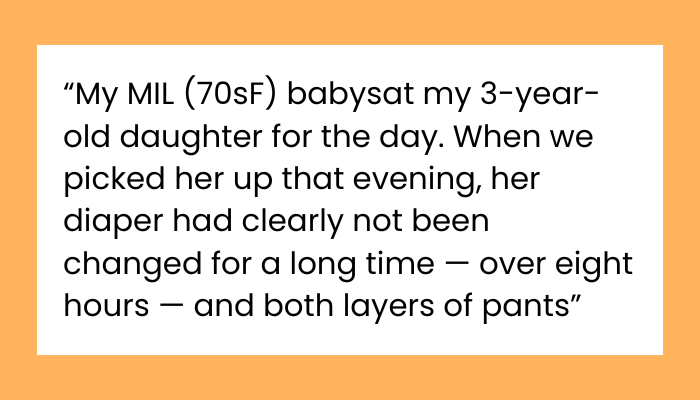
What happened with your 3-year-old’s diaper is more than just a little oversight—it’s a matter of your child’s well-being, which is your top priority as a parent. A diaper that’s left on for hours to the point where it soaks through two layers of clothes is not just uncomfortable for your child; it can lead to irritation, rashes, and even infections. That’s a clear issue, and you had every right to raise it.
The Real Issue: Accountability
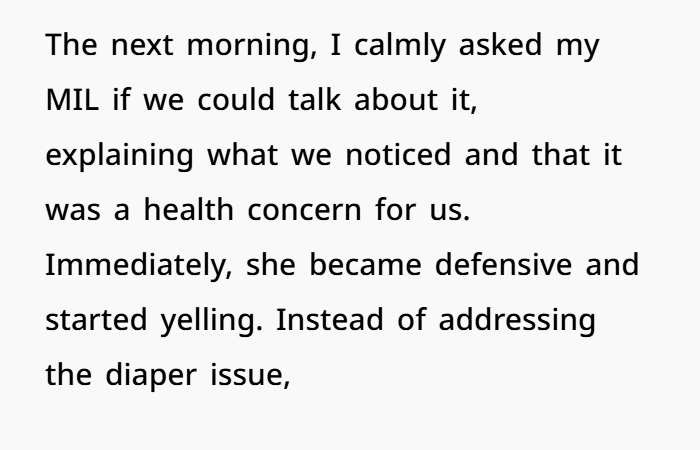
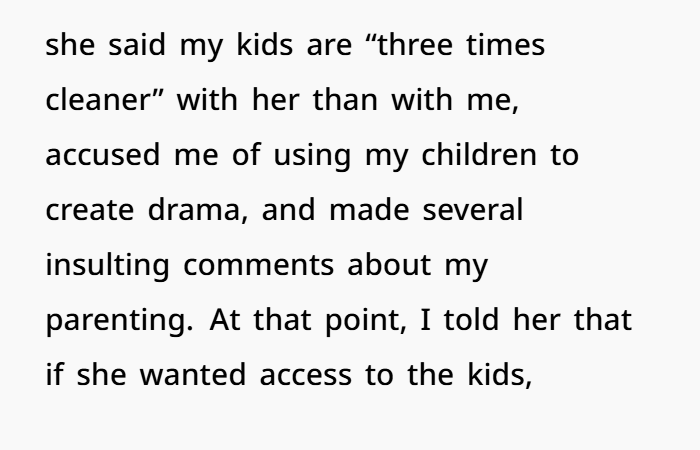
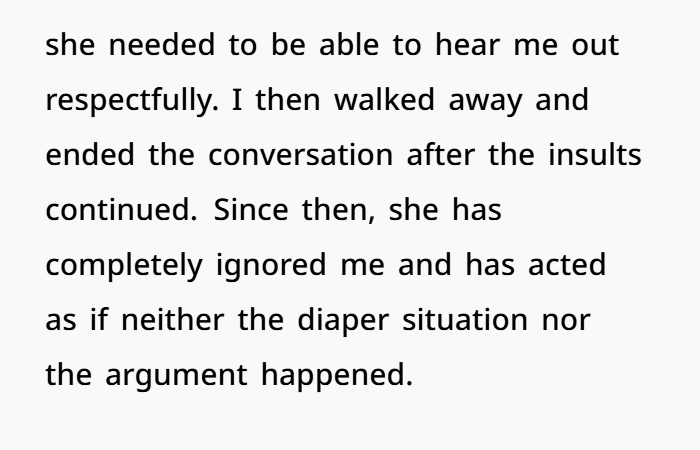
You approached the situation calmly the next morning, as any rational person would, wanting to address what happened and ensure it doesn’t happen again. Instead of being met with understanding or a willingness to fix the issue, your MIL got defensive, yelled, and insulted your parenting. That is not acceptable.
The behavior she displayed wasn’t just about the diaper incident—it was a blatant refusal to take responsibility for her actions. Her response to dodge the real issue and turn it into an attack on your parenting is the problem, not the diaper itself.
Your Boundary Is Healthy
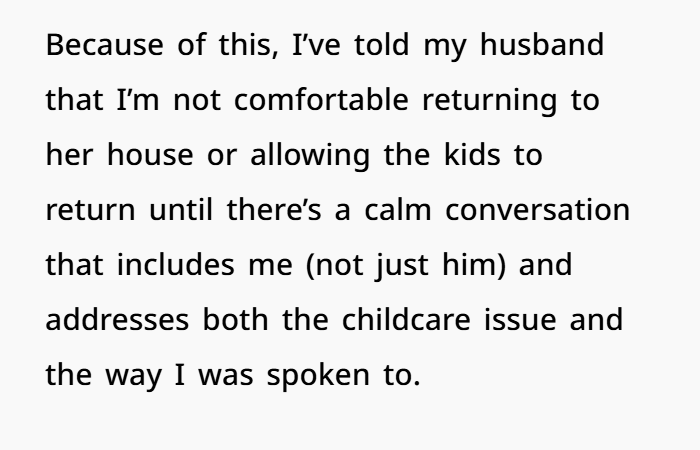
You set a boundary by saying there would be no further visits or returns without some clarity and accountability from her. That’s totally reasonable. It’s not about holding a grudge—it’s about ensuring there’s respect, responsibility, and mutual understanding going forward. You’re not just “holding onto anger”; you’re trying to establish healthy communication, something that any respectful relationship, especially one with family, should have.
Your Husband’s Perspective
It’s understandable that your husband might want to smooth things over to avoid conflict, but your discomfort is legitimate. Just because your MIL “apologized privately” doesn’t mean the issue is resolved. A private apology doesn’t address the behavior or the lack of accountability. You deserve clarity and concrete actions, not vague apologies that don’t fix the underlying problem. It’s not about “moving on” without addressing the issue—it’s about protecting your child and ensuring that this kind of neglect doesn’t happen again.
You Are Not Overreacting
You’re not overreacting. Setting boundaries is essential, especially when it comes to your child’s safety and well-being. You have every right to ask for clarity, accountability, and a more respectful approach to your concerns. Your comfort and trust are just as important as your MIL’s feelings. If she’s unwilling to respect your boundaries, that’s an issue that needs to be addressed before you can move forward with any further visits.
Conclusion
In this situation, you did exactly what any parent should do: you spoke up for your child and set a boundary to ensure it doesn’t happen again. You’re not being unreasonable. You’re being responsible and protective of your child, and that is valid. Don’t let anyone tell you otherwise. It’s perfectly fair to want clarity, respect, and accountability before resuming visits.
All it takes is one act of neglect to shatter the trust between a parent and a grandparent

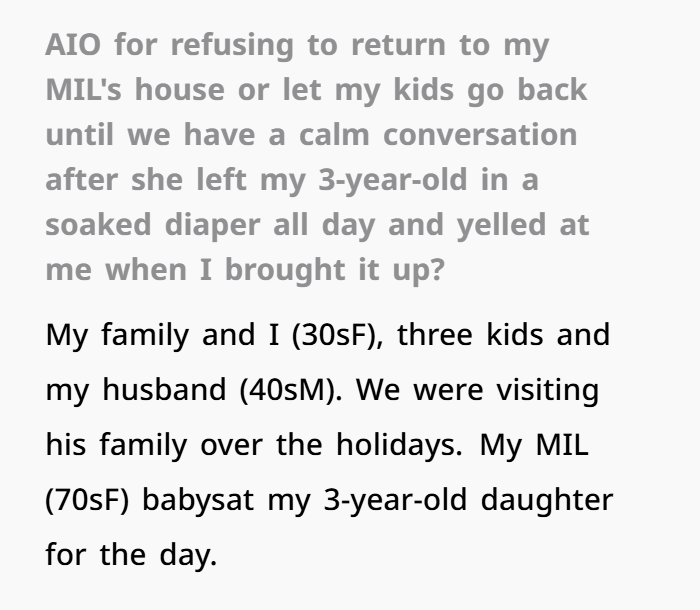
A mom discovered her MIL had left her 3-year-old in a soaked diaper for over eight hours

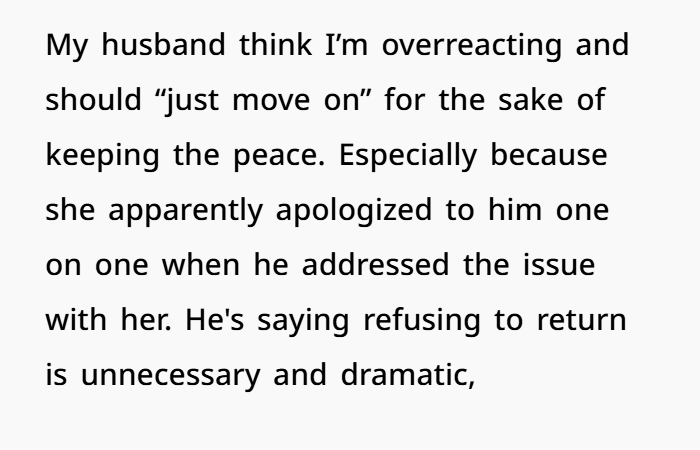
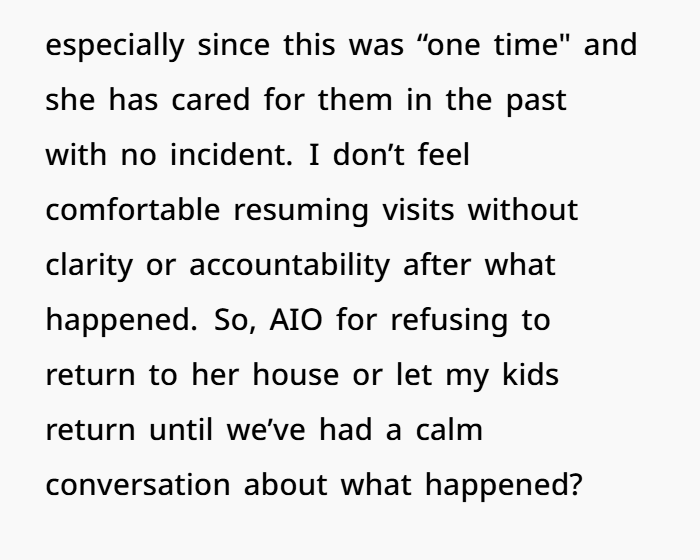
Let’s talk about this in a way that feels honest, straight forward, and human. Because what you’re dealing with isn’t just a diaper incident. It’s about respect, communication breakdown, child safety, and clear boundaries with family — especially in‑laws.

1. This Wasn’t “Just a Mistake” — It Was a Health Concern
have a space where your children are cared for and safe, it’s important to maintain that environment, both physically and emotionally. Your home should be a place where everyone feels respected, especially when it comes to your kids’ needs. When your MIL neglected basic care for your child, it disrupted that comfort, and you were right to address it. The way you respond now will set the tone for future visits—ensuring that both you and your kids feel respected and safe.
7. You’re Doing the Right Thing
Finally, let’s just emphasize: you are doing the right thing. You’re standing up for your child’s well-being and setting a healthy, necessary boundary. That’s not overreacting—it’s responsible parenting. It’s being proactive about ensuring that future visits are safe, respectful, and supportive. By addressing this issue now, you’re preventing bigger conflicts down the line. And more importantly, you’re teaching your children that their needs, comfort, and boundaries are important.
You’re not the one making things difficult. You’re the one ensuring things are better in the future—for yourself, for your kids, and even for your relationship with your MIL. But that requires accountability on her part, and until that happens, you’re within your rights to wait for clarity before resuming visits.
Conclusion
In the end, this wasn’t just about a wet diaper—it was about respect, communication, and accountability. You didn’t overreact; you noticed something wrong and set a healthy boundary to protect your child and your emotional well-being. You asked for the respect you deserve, and you’re waiting for it before moving forward. That’s not just fair—it’s essential for maintaining a healthy family dynamic. If your MIL is truly sorry, she’ll take the time to acknowledge her mistake, communicate properly with you, and give you the closure you deserve.

Absolutely. Your feelings and boundaries are valid, even if others don’t fully understand them. Setting healthy boundaries is about protecting your child, protecting your emotional well-being, and making sure that family dynamics are respectful and considerate for everyone involved. If people want to label you as dramatic or overly sensitive, that’s their issue, not yours. You have every right to set boundaries that prioritize the safety, peace, and comfort of your family.
9. Your Peace is Important Too
When you set boundaries, you’re not just standing up for your child’s physical health, you’re also standing up for your own peace of mind. A family visit should be something you look forward to, not something that fills you with anxiety or fear of another incident. You should feel at ease, knowing that your concerns are heard and respected, and that you and your child can be safe and comfortable. Without that, any interaction becomes an emotional burden instead of a time for connection and joy.
When your comfort and peace are valued, it fosters a healthier relationship with your family in the long run. You’re teaching others how to treat you—whether it’s your MIL or your husband—and creating a healthier dynamic for everyone, including your child.
10. Healing Takes Time and Clarity
This boundary isn’t just a temporary fix. It’s about ensuring long-term clarity and healing. It’s giving both you and your MIL the space to reflect on what happened and how things can improve. It’s about finding a way to move forward in a way that supports emotional safety for everyone. It’s also an opportunity for you to reset the relationship with your MIL, so future interactions are based on mutual respect, and you don’t have to second-guess whether your child’s needs will be met.
Conclusion
By setting this boundary, you’re doing more than just addressing one isolated incident—you’re laying the groundwork for healthier family interactions in the future. You’re ensuring that your child’s well-being, your emotional well-being, and your family’s relationships are all respected and maintained. This boundary is about preventing future problems, not punishing anyone. You’re standing firm for your family’s peace and health, and that’s exactly what you need to do to protect your child and yourself. You are not overreacting. You’re doing the right thing for your family, and you deserve to be supported in that choice.
That’s not high conflict. That’s wise conflict management.

9. What a Real Conversation Should Look Like (When It Happens)
When you do get that calm conversation, these are the things that matter:
Acknowledge what happened.
Not “Well, it was snowing.” Not “Kids are fine.” But: “I messed up by not changing the diaper.”
Talk about how it made you feel.
Not to guilt trip — but to clear the air.
Agree on expectations going forward.
Next time, if you watch the kids, here’s how we handle diapers, snacks, nap time, communication, etc.
End with mutual respect.
Not grudges.
That’s it.
And that’s what you want. Not to punish her. But to ensure peace, clarity, and respect.
The internet unanimously agreed that this mother-in-law is the type that all bad stereotypes are probably based on


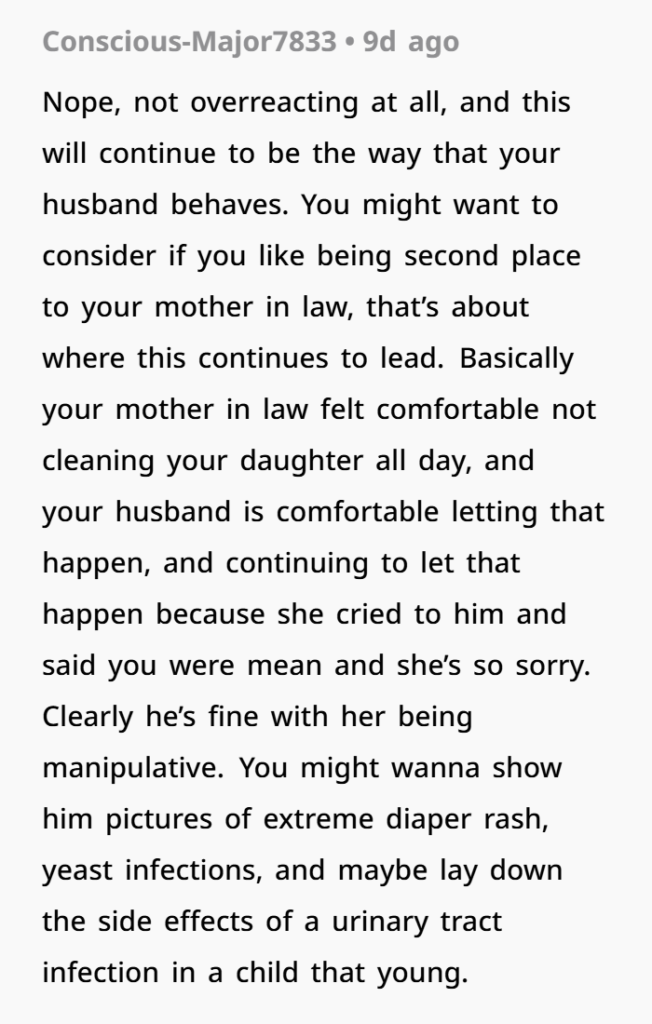




Absolutely. Peace isn’t real if you’re the only one giving in. For so many parents, the desire to keep the peace with in-laws often means compromising their own boundaries and sacrificing their emotional well-being. But true peace comes from mutual respect, not from constantly accommodating others at the expense of your own needs.
What you’re doing is brave—and it’s not easy. You’re standing up for what’s best for your child, prioritizing her physical and emotional well-being. You’re also protecting your own emotional safety, refusing to ignore an issue that could affect your family long-term.
By not sweeping it under the rug, you’re setting an example of healthy boundary-setting for both your child and your family. This is parenting with intention. You’re showing your child that her needs matter, and you’re also teaching her that it’s okay to speak up and demand respect when something isn’t right. You’re not just reacting to an incident—you’re creating a safer, more supportive environment for everyone.
That’s strength. And it’s something that will pay off in the long run.