My MIL Chose a Predator Over Her Family—Now I’m the Villain for Setting Boundaries
OP’s situation is undeniably heartbreaking, as it centers on the tough decision of choosing her child’s safety over maintaining family peace. Here’s the reality: boundaries are essential, especially when it comes to protecting loved ones.
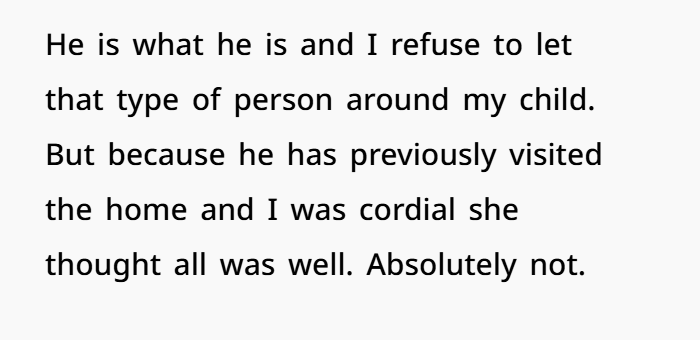
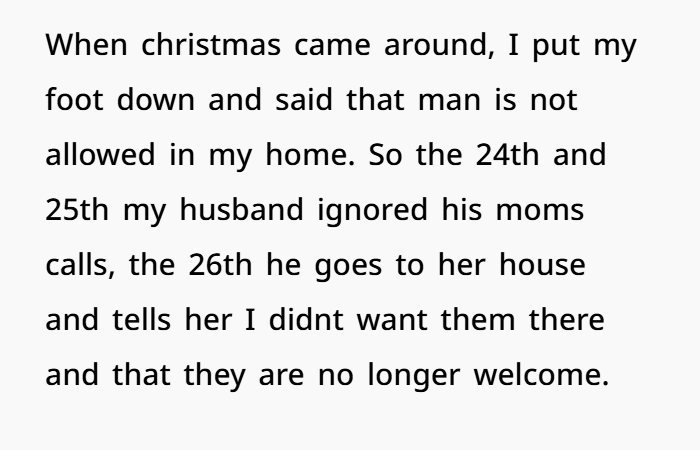
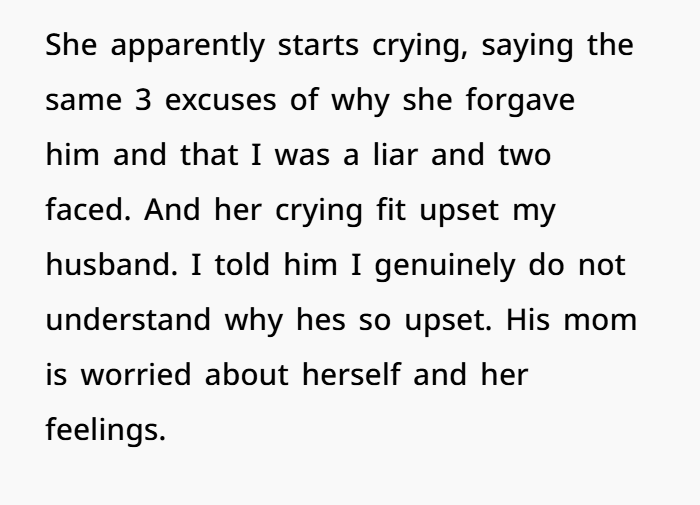
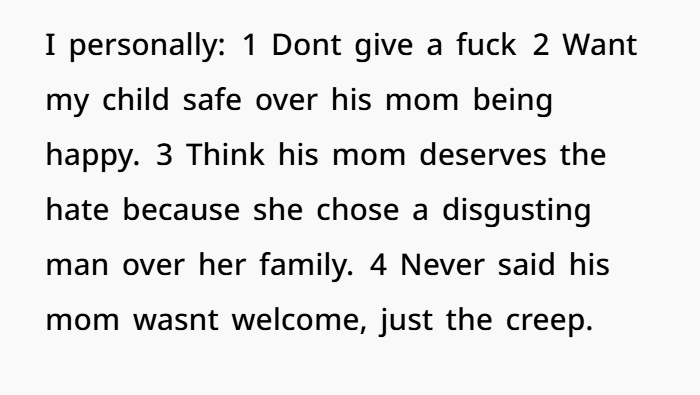
Let’s break this down: OP’s mother-in-law (MIL) allowed her husband—who had previously sent an inappropriate and predatory message to his own step-granddaughter—back into the family fold after a brief separation. While OP was cordial in the past, it’s understandable that she finally reached her limit when MIL insisted on reintroducing him to family gatherings. The decision to refuse letting him into her home for Christmas was one rooted in protecting her child from potential harm, no matter how uncomfortable it made her MIL or the rest of the family.
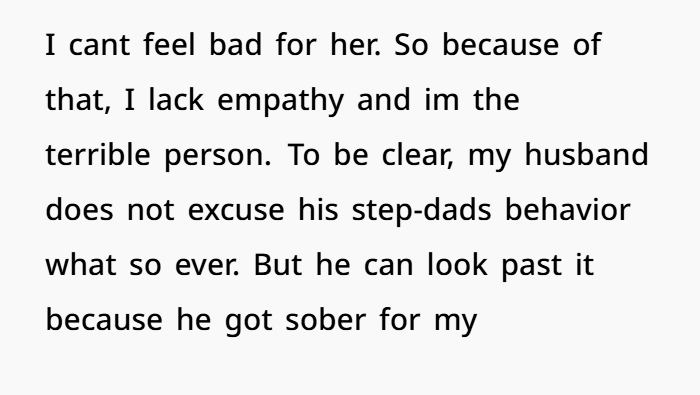
The fallout? Intense family tension, emotional outbursts from the MIL, and her husband blaming OP for upsetting his mother. In a situation like this, OP’s refusal to allow someone with a troubling past into her home is not an act of cruelty or lack of empathy—it’s a stance taken for the well-being of her child. And honestly, prioritizing safety over family drama should never be considered heartless.
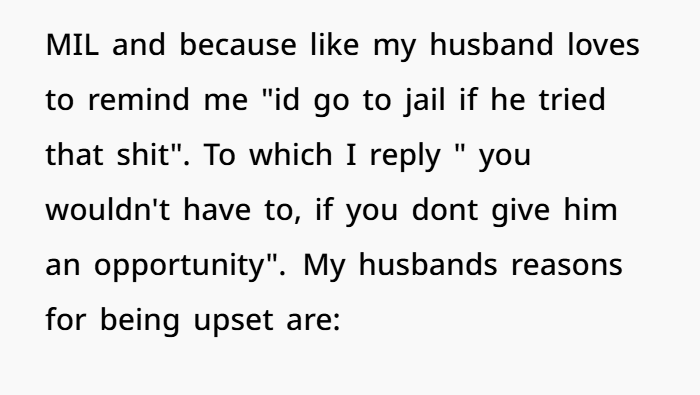
When her husband calls her “heartless” for not allowing the predator into their home for Christmas and accuses her of lacking empathy for his mother, it’s a clear sign that emotional manipulation is at play. It’s not about being unsympathetic to the MIL’s feelings, but rather about drawing a firm line on what’s acceptable for the safety of their child. She’s made it clear she’s protecting her family, which is both responsible and necessary.
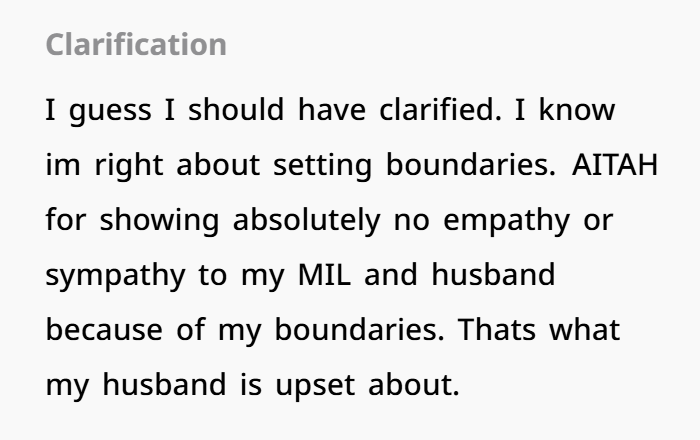
OP is questioning whether her emotional detachment toward her MIL’s pain makes her an a**hole. But, let’s be clear: setting boundaries isn’t the same as being cold or heartless. It’s about knowing your limits and choosing the well-being of your loved ones over appeasing someone else’s desires, even when it hurts. And in this case, OP is in the right. Boundaries aren’t always easy or comfortable, but they’re necessary, especially when the stakes involve a child’s safety.
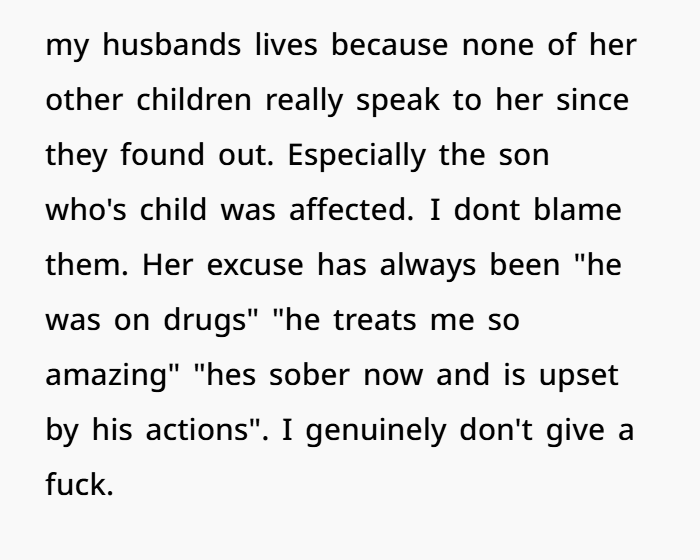
When the family found out he’d been sending dodgy messages to one of the teenage grandkids, many cut contact

But his wife is sticking by his side, and seemingly choosing him over her own kids
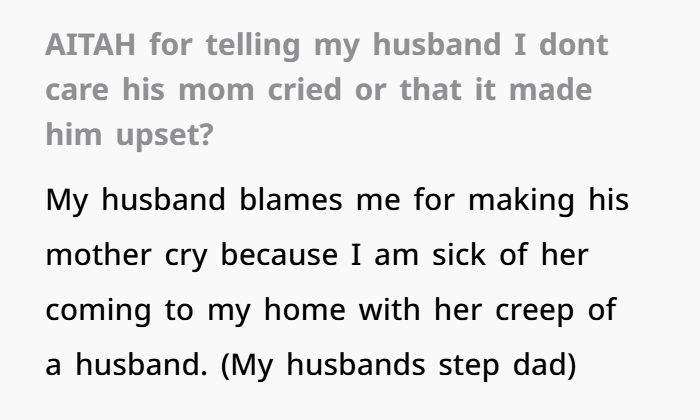

This situation goes beyond being “cold”—it’s about protecting your peace, your child’s safety, and your family’s mental well-being when others are too willing to sweep harmful behavior under the rug. It’s a textbook example of how toxic family dynamics, predator protection, and emotional gaslighting can collide in real life. So let’s break this down—compassion, boundaries, family loyalty, and how we define “forgiveness.”
You Can Set Boundaries Without Being the Therapist
Let’s be clear: you are not obligated to comfort anyone who brings chaos into your life—especially family members. OP has every right to set firm boundaries, particularly when it involves the safety of a child. The stepfather-in-law in this situation didn’t just have a “past”—he committed an act of sexual predation by texting a teenager asking for inappropriate pictures. That’s not a mistake, that’s predatory behavior. Period.
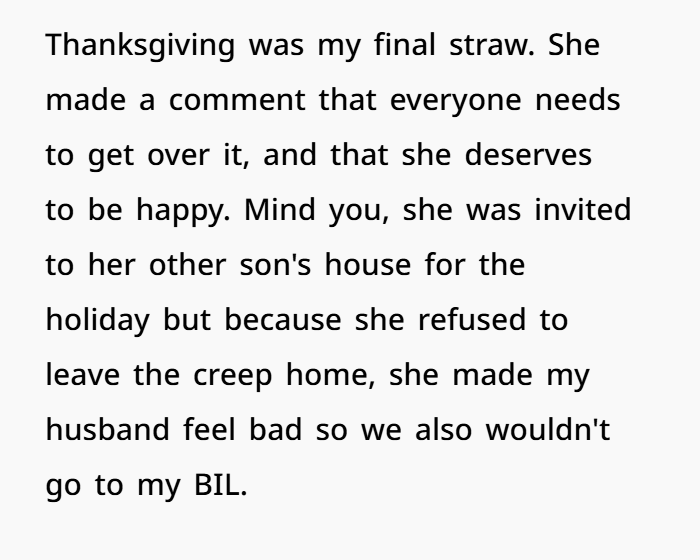
The MIL made a conscious choice to bring him back into her life despite knowing what he did. Then, she attempted to reintegrate him into family holidays as if nothing happened. This isn’t about seeking peace; it’s willful ignorance and emotional manipulation.
OP does not owe her MIL comfort in this situation. This is not just family drama—it’s about safeguarding her child from potential harm. Setting this boundary is not cold; it’s necessary.
Empathy Doesn’t Mean Enabling
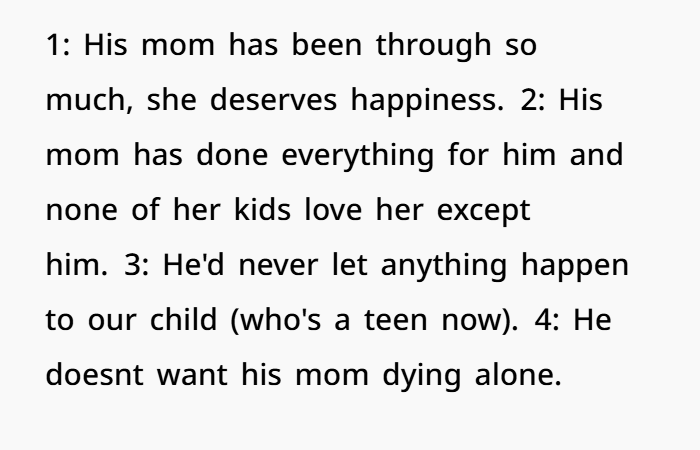
One of the biggest misconceptions people face is the difference between empathy and enabling. OP’s husband argues that his mom has been through so much and “deserves happiness.” But at what cost?
When someone like the MIL enables a predator, she doesn’t just hurt the immediate victim—she gaslights the entire family into believing that forgiveness is the only “right” path. If anyone objects, they are suddenly the problem: “cold,” “unforgiving,” or “lacking empathy.”
Here’s the truth: empathy is not a free pass for predators. OP’s responsibility is not to ensure her MIL’s happiness when she’s willfully inviting danger back into the family.
Emotional Labor Is Not a Wife’s Job—Especially in Dysfunctional Families
OP is also dealing with a common issue many women face in marriages: being expected to do the emotional labor when family drama unfolds. She’s cast as the villain, not because she did anything wrong, but because she refused to make others feel comfortable about something deeply troubling.
This is a massive emotional burden to bear, especially when her husband shifts the blame onto her, despite the fact that OP is the only one prioritizing their child’s safety.
Let’s talk about the keywords here: marriage conflict over in-laws, boundaries with toxic parents, and survivor support in families. These are painful issues that often lead to divorce—not because people are heartless, but because some refuse to confront the monsters sitting at the dinner table.
When “Forgiveness” Becomes a Weapon
Another disturbing layer is how the MIL constantly excuses the stepfather-in-law’s behavior by saying things like, “He was on drugs,” “He’s sober now,” and “He’s sorry.” These are not apologies; they’re excuses, and they’re not accountability.
In abuse recovery circles, especially those involving child victims, sobriety does not guarantee safety. Being off substances doesn’t erase predatory behavior. And “sorry” doesn’t undo the trauma that has been inflicted.
By pushing the family to forgive and forget, the MIL isn’t just enabling; she’s re-traumatizing those who were affected. Worse, she’s teaching younger family members that as long as an abuser says “sorry” enough times, they can be welcomed back into the fold.
OP’s refusal to play that game isn’t cruelty. It’s integrity. She’s chosen to protect her family’s mental and emotional health by refusing to participate in a toxic cycle of forgiveness that fails to acknowledge the real harm done.
Ultimately, setting boundaries to protect your loved ones from potential harm is an act of strength, not coldness. And in this case, OP is right to put her child’s safety first. The MIL’s desire for peace doesn’t outweigh the responsibility to safeguard everyone in the family—especially the vulnerable.
Her Husband’s Response—Classic Emotional Triangulation

Let’s not overlook what’s going on with OP’s husband. He’s emotionally torn, but instead of protecting his wife and child, he’s trying to mediate between his mother’s guilt and his wife’s boundaries.
This is emotional triangulation, and it’s incredibly toxic. By trying to balance everyone’s feelings, he’s completely ignoring the real issue: there’s a predator being reintroduced into their lives. His priorities are out of whack. Wanting his mom to “not die alone” is emotional manipulation disguised as compassion. What about ensuring his daughter doesn’t feel abandoned by the one parent who is actually protecting her?
“Cold” Doesn’t Mean Wrong
At the heart of OP’s question is this: “Am I the a**hole for not feeling bad?”
The short answer? No. You’re not cold. You’re numb from dealing with dysfunction for far too long. You’re exhausted from being gaslit, from being made to feel like the enemy simply because you care more about your child’s safety than someone else’s tears.
Empathy is earned, not owed. Especially when someone repeatedly chooses to protect a predator over the safety of their family. It’s not OP’s job to carry the emotional burden of someone else’s selfish decisions.
In this situation, OP’s stance isn’t about cruelty—it’s about self-preservation and protecting the most vulnerable members of her family. She’s standing firm in the face of toxic emotional manipulation, and that’s something to respect.
She gave more info after concerned netizens raised a number of questions

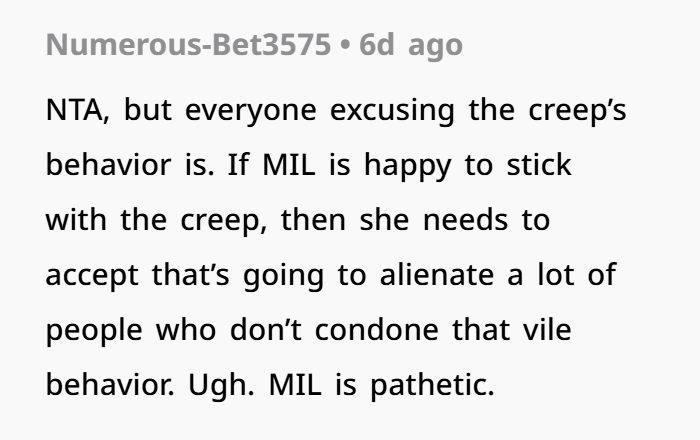

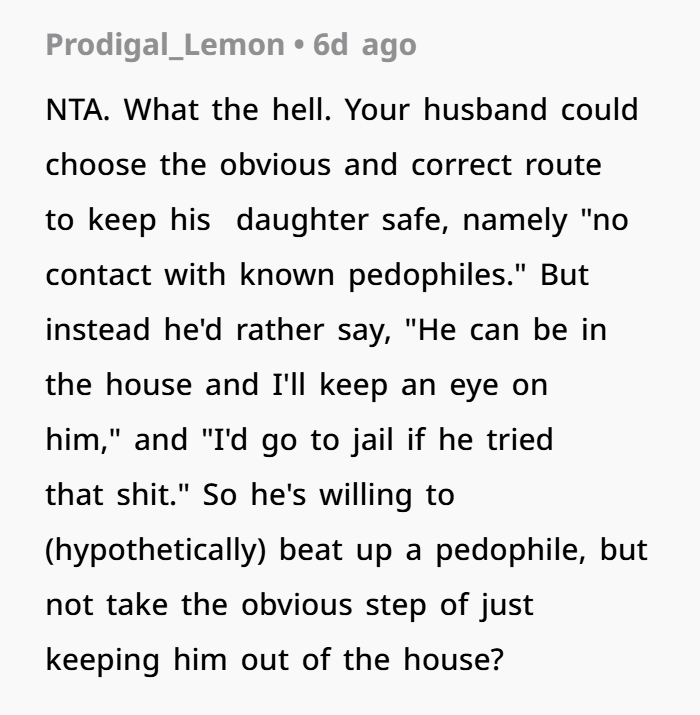
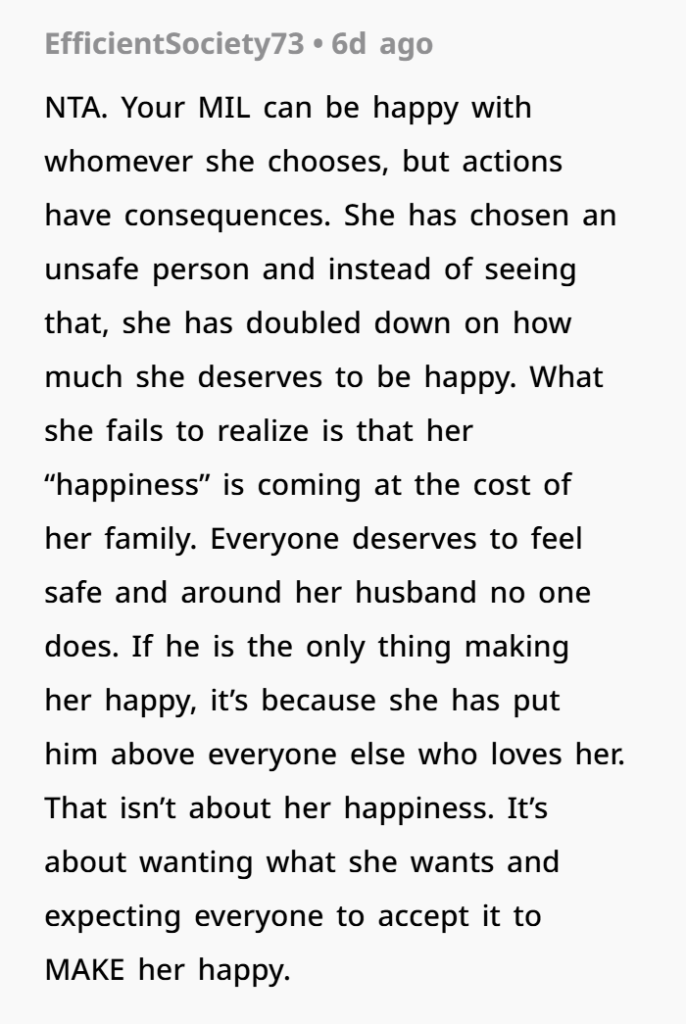

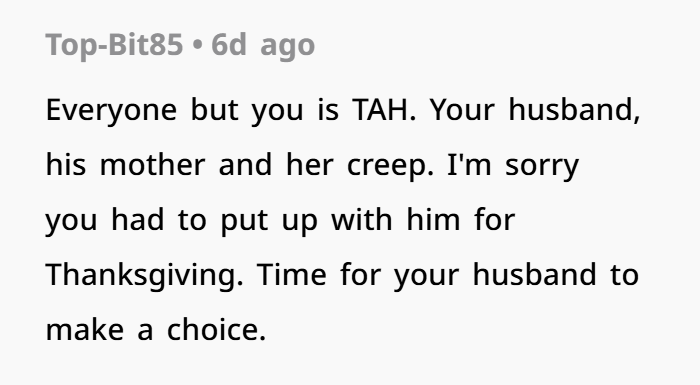
OP, you’re not heartless. You’re not lacking empathy. You’re simply done pretending that people like your MIL are victims when they’re actively protecting the real monsters.
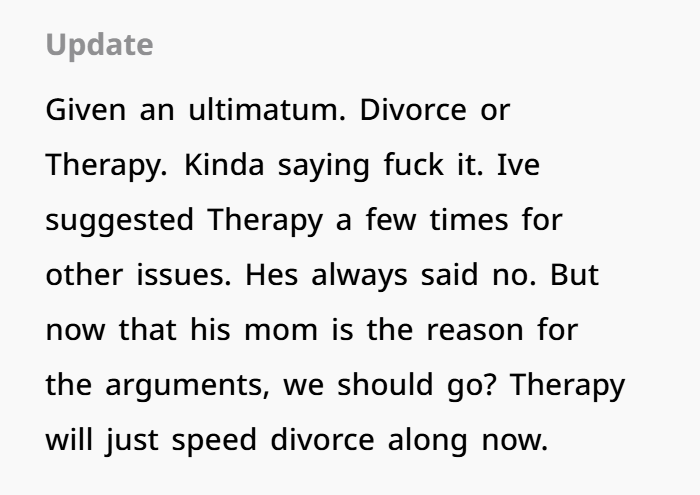
If your husband can’t see that, then maybe therapy is the first step—to understand whether you’re married to someone who values emotional comfort over moral courage.
Protect your child. Protect your peace. Let them call you cold. Because at least your daughter will always know that you were the one adult who never once hesitated to stand between her and danger.