I Kicked My Mom’s Friend Out on Christmas for Attacking My Sister’s Mental Health Was I Wrong?
OP’s decision to protect her sister in this situation was not only reasonable, but it was an act of care and responsibility. The emotional stakes here are high, and the environment OP created was specifically meant to be safe and supportive for her sister, who has bipolar disorder. Given that Christmas is already a stressful time for her sister, and that she takes steps to manage her condition, including avoiding alcohol and staying on her medications, it’s clear that the atmosphere was intended to be calm and healing.
The Line Was Crossed
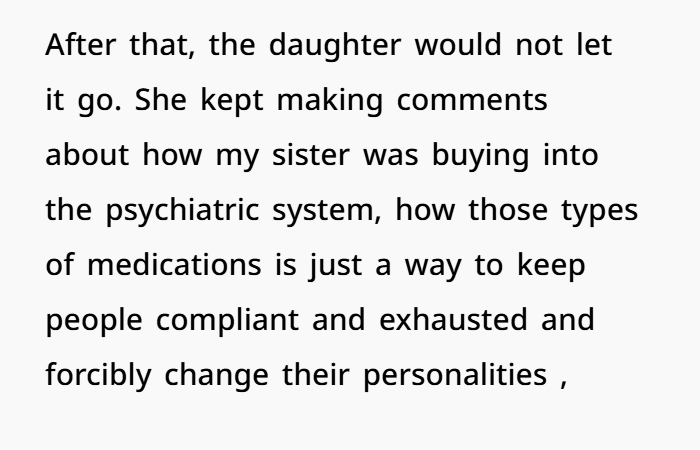
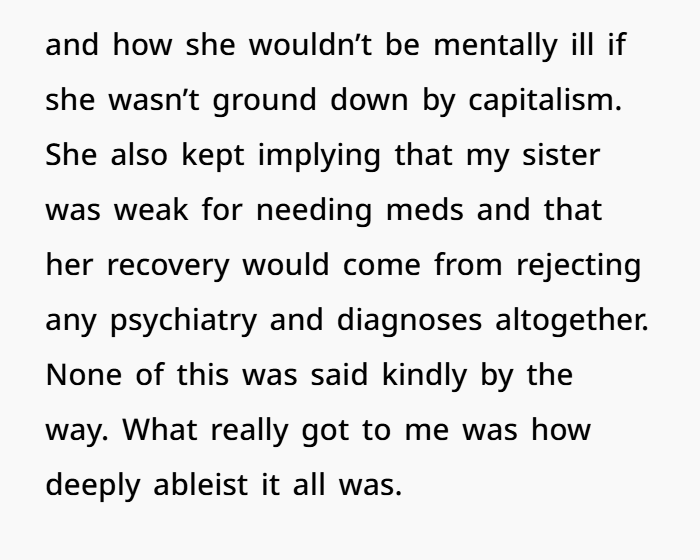
When the OP’s mother invited her best friend and her daughter—who is known for holding extreme anti-psychiatry views—it was setting the stage for potential conflict, but the gravity of the situation didn’t fully hit until the daughter started harassing OP’s sister. The views she espoused weren’t just different from what OP’s sister might believe—they were directly damaging to her mental health and well-being. Telling someone with a mental illness that their medication is “capitalist oppression” and that their illness is “a social construct” is deeply invalidating, harmful, and disrespectful.
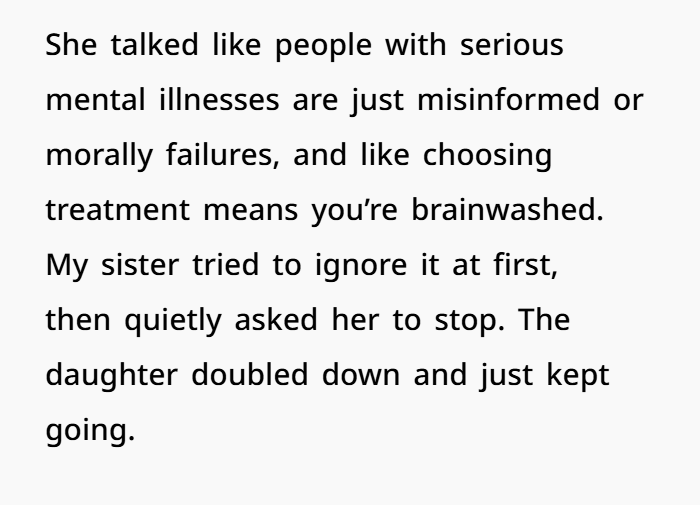
Despite being asked to stop, the guest doubled down, and as a result, OP’s sister was left crying. This was no longer a matter of differing opinions—it became emotional abuse. At that point, OP had every right to step in and defend her sister, even if it meant upsetting her mother and the guests.
Setting Boundaries for Safety
OP’s priority should always be the safety and well-being of her sister, especially when she has worked so hard to maintain stability. By asking the guests to leave, OP was making a firm, protective choice that said, “Your behavior is unacceptable, and I will not allow it in my home, especially when it harms my sister.” This is exactly what any responsible, loving family member would do when faced with emotional cruelty disguised as political ideology.
Her mother’s response—accusing OP of embarrassing her and calling her “politically intolerant”—is a classic case of emotional manipulation. The real issue here is not OP’s reaction, but the fact that her mother was willing to let someone’s harmful, uninvited opinions overshadow her daughter’s mental health. In a situation like this, OP had to make a choice between maintaining family peace and protecting her sister, and she chose the latter.
Was OP Wrong?
No, OP wasn’t wrong. Her decision was made out of love and a desire to protect her sister from harm, something any sibling would do. While it may have created tension in the family dynamic, it was a necessary boundary to uphold, particularly when the guests’ actions were directly harmful to her sister’s mental health.
It’s understandable that OP’s mother might have felt embarrassed, but that’s her issue to resolve—not OP’s. If anything, the real embarrassment should be on the guest who showed a complete lack of empathy and respect for OP’s sister. And if her mother is more concerned with appearances than her own daughter’s well-being, then OP may need to reassess her relationship with her as well.
Conclusion
OP did the right thing. She stood up for her sister, ensured her safety, and protected the peaceful environment she worked hard to create. While the mother’s reaction was frustrating, OP’s responsibility was to her sister’s emotional and mental well-being. In situations like this, family doesn’t mean tolerating harmful behavior—it means standing by each other, especially when someone is being harmed. OP’s actions were driven by care and responsibility, and she has nothing to apologize for.
Sometimes the best way to shut people up is simply asking them to leave your space

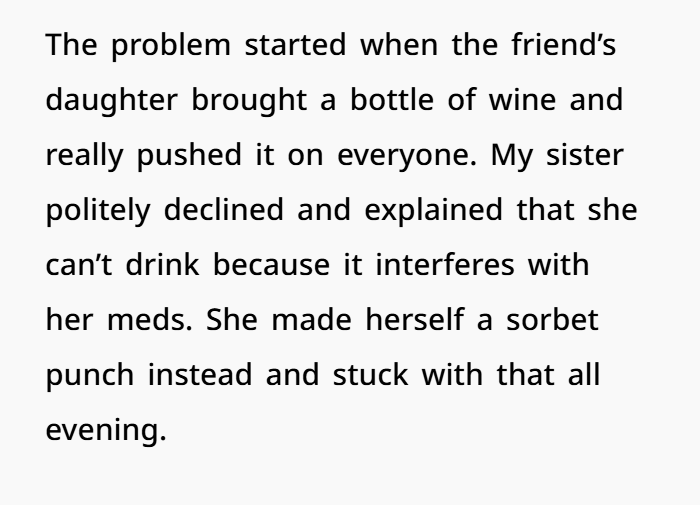
The author shared her sister who has bipolar disorder takes her medication seriously and often avoids alcohol as it could interfere with it
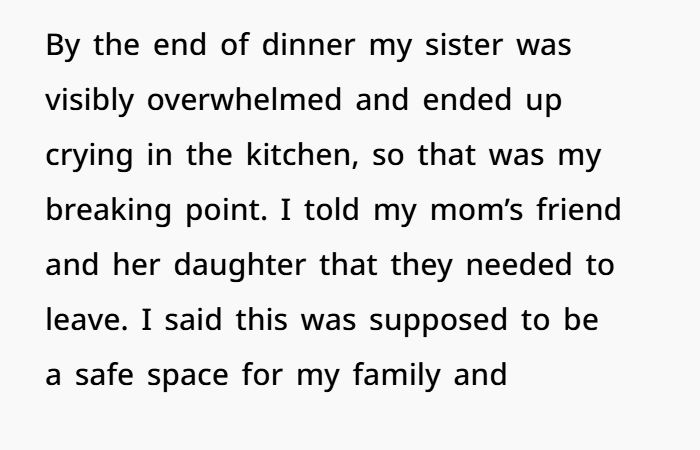

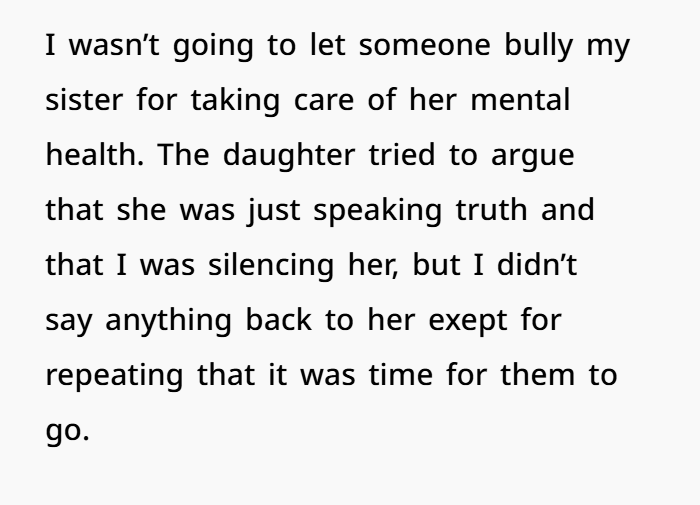
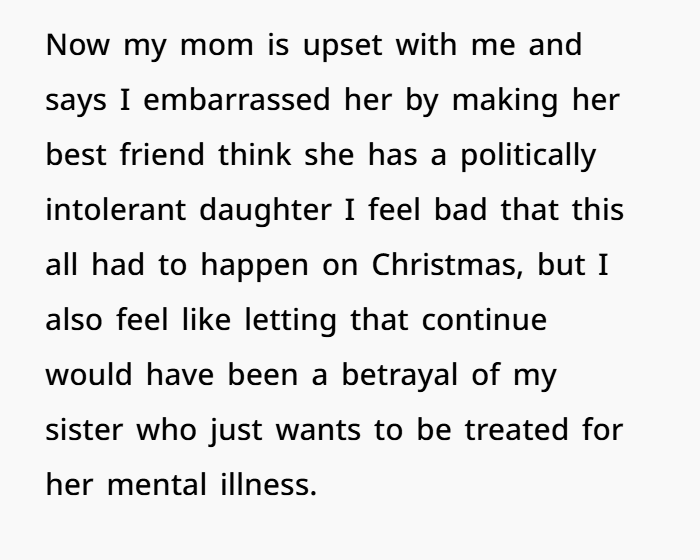
space for your sister, and the last thing you should have to tolerate is someone attacking her stability under the guise of “opinion.” This wasn’t a minor conflict; this was someone’s harmful rhetoric actively threatening your sister’s well-being during a vulnerable time.
You didn’t overreact. You stepped up in the face of emotional sabotage.
You Protected Your Sister When No One Else Would
Here’s the reality: you protected your sister when no one else did. That is not an overreaction—it’s exactly what love and responsibility look like. Your sister was trying to enjoy the holiday, manage her mental health, and stay stable—despite the potential for heightened stress. But she was being verbally attacked by someone who had no right to challenge her reality or undermine her treatment.
Let’s be clear: this wasn’t a political disagreement or intellectual debate. This was someone using their misguided “opinions” to harass and gaslight your sister. They weren’t offering a different perspective; they were invalidating her lived experience, undermining her treatment plan, and pushing harmful beliefs onto someone already navigating a complex and fragile mental health condition.
Anti-Psych Med Rhetoric Isn’t “Just An Opinion”—It’s Dangerous
Now, let’s talk about the toxicity of this anti-psychiatry rhetoric, especially during the holidays. The guest’s daughter didn’t just offer an alternative perspective; she attacked your sister’s health, mocked her treatment, and suggested that needing medication was a failure of character. This isn’t just “differing opinions”—this is gaslighting and abuse. It’s a form of verbal violence.
Imagine this: Would we let someone walk into a diabetic person’s home and lecture them about rejecting insulin as a “capitalist tool”? Of course not. But because we’re talking about mental illness, society often gives people a pass to be cruel, dismissive, and hurtful. They think their “opinions” are harmless, but they’re not. They are dangerous. It’s time we stop tolerating this kind of harmful rhetoric just because it’s about mental health.
Christmas Is Not the Time for Emotional Sabotage
Here’s where this gets especially frustrating: People often use the “but it’s Christmas!” card to try to manipulate others into ignoring harmful behavior during the holidays. But the holidays don’t give anyone a free pass to emotionally sabotage someone else—especially not when that someone is already managing a mental illness.
Christmas can be a particularly challenging time for people with bipolar disorder. The emotional stress, disruptions to routines, and social conflicts can trigger instability. You were hosting. You created a safe space for your sister—a space where she could feel calm, supported, and emotionally secure. And that peace was shattered by someone whose rhetoric made her feel unsafe and invalidated. That’s not just inconsiderate—it’s emotionally dangerous.
Boundaries Matter, Especially in a Toxic Tolerance Culture
We’re living in a culture that loves to preach tolerance, but there’s a fine line between being tolerant and being complicit in harmful behavior. Just because someone’s “opinions” are wrapped up in pseudo-intellectual language doesn’t mean you should tolerate them if they cause harm. Boundaries matter, and standing firm in enforcing them is not “intolerant”—it’s necessary.
You made the right call by asking the guests to leave. You respected your sister’s boundaries and made sure she wasn’t further emotionally hurt. That’s not selfish. That’s self-preservation for her mental health. You protected her in a moment where no one else would. If that makes you “politically intolerant” in your mother’s eyes, then so be it. But you did what was right.
Conclusion
You did not overreact, and you are not in the wrong. You stepped up for your sister when it mattered most. You protected her from harmful, uninvited rhetoric, and you stood by your boundaries in a situation that could have easily escalated into emotional chaos. Your actions were rooted in love, care, and responsibility—and that’s what truly matters.
It’s time to stop tolerating harmful rhetoric in the name of politeness or family harmony. You stood firm, and that’s something to be proud of.
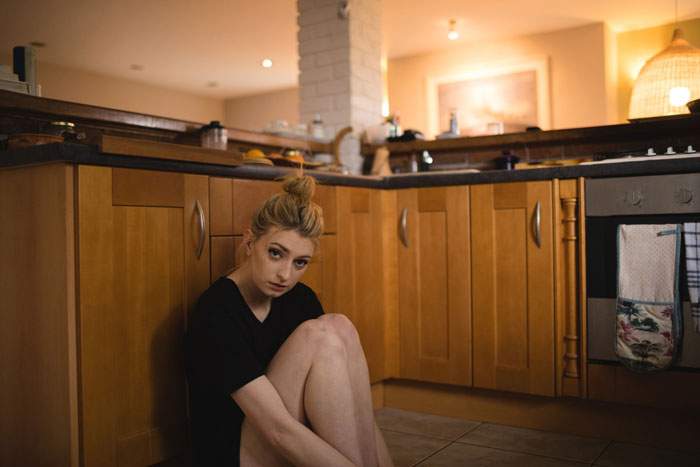
That’s not on you. That’s on her.
Let’s be clear: your mother’s reaction speaks volumes about her priorities. She’s more concerned with appearances than with the fact that her daughter was actively suffering at her own table. That’s not something to feel ashamed of—it’s deeply revealing about where your mom’s focus lies. Her discomfort with your actions says more about her than it does about you.
You Can Be Kind Without Being Complacent
Many people confuse kindness with endless accommodation, but here’s the truth: boundaries are not cruelty—they’re clarity. You didn’t yell. You didn’t escalate things unnecessarily. You calmly asked the guests to leave after giving them the chance to stop their hurtful behavior. That’s not being cruel—it’s being clear about what is and isn’t acceptable in your home, especially when it comes to protecting your sister’s mental health.
The real test of a family isn’t about how perfect things look on holidays. It’s about how well you defend each other when it really matters—when someone is being hurt, attacked, or belittled. And you passed that test. You stood up for your sister in a moment when no one else was willing to do so.
Political Views vs. Personal Attacks
Let’s talk about your mom’s framing of the situation as a “political disagreement” and accusing you of being “intolerant.” This is classic deflection. This wasn’t a political disagreement; this was basic human decency. Disagreeing on a tax policy or a social issue? That’s political. Telling someone their mental illness is a weakness and that their treatment is a scam? That’s a character attack.
Your sister wasn’t looking for a debate about psychiatry or medication. She wasn’t trying to argue or impose her views. She was simply trying to survive Christmas, a holiday that already carries a lot of stress, especially for someone with bipolar disorder. She didn’t need to be attacked. She needed support, and your mom failed to provide that.
The guest could’ve gone on about capitalism and anti-psychiatry until the cows came home. But instead, she fixated on your sister and tried to tear down her reality. That wasn’t a conversation—it was targeted ableist aggression. And that’s exactly why you had every right to draw the line and ask them to leave.
You Did the Right Thing—Even If It Was Messy
Yes, it sucks that this happened on Christmas. Yes, it probably wasn’t how you imagined the day going. But don’t let the holiday setting cloud the reality of the situation: you made a hard decision in a high-pressure moment to protect someone who needed it. That’s what love looks like. That’s what true support looks like. It’s not about being passive to avoid conflict—it’s about standing up when it matters, even if it’s uncomfortable or messy.
Your sister will remember this. She will remember that when someone tried to shame her for taking her meds and tried to invalidate her experience, you stood up for her. She will remember that her mental illness didn’t make her a burden—it made her your priority.
And no matter what your mom says, that is the real spirit of the season. You chose to protect your sister’s emotional well-being over maintaining peace with a guest who had no respect for her. You chose love over tolerance, empathy over politeness, and that is something your sister will remember for years to come.
Conclusion
Don’t let anyone tell you that you were wrong to protect your sister. You did what any good sibling would do: you stood firm in the face of cruelty and defended her in a moment when no one else would. That’s not only the right thing to do—it’s the brave thing to do. You may have faced backlash, but the truth is, your actions were driven by love, empathy, and a desire to protect your sister from harm. That is the real essence of family, and the holiday season can’t be reduced to a moment of discomfort caused by someone else’s ignorance and cruelty. You did what was needed, and that is something to be proud of.
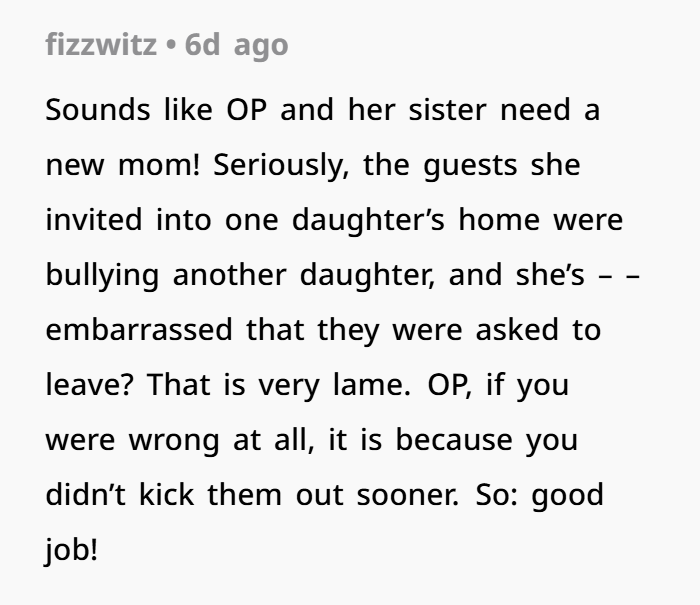
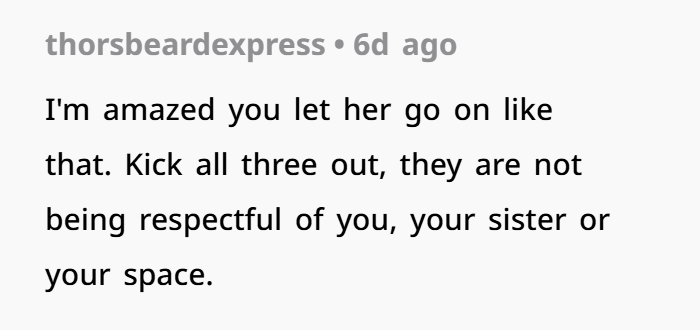
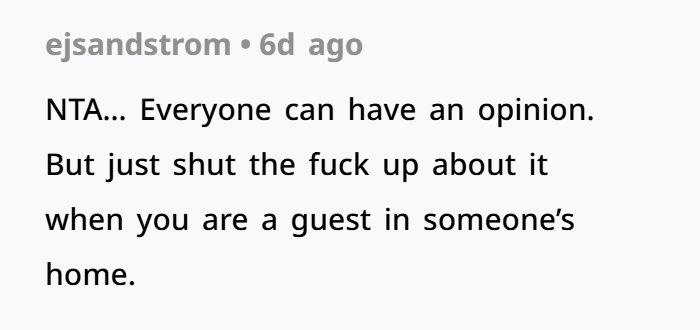
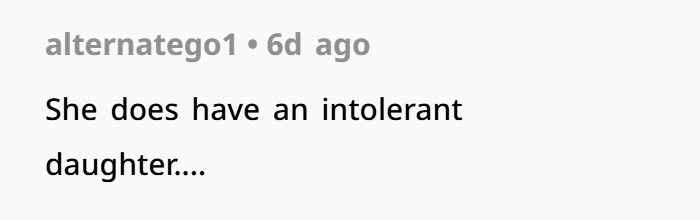
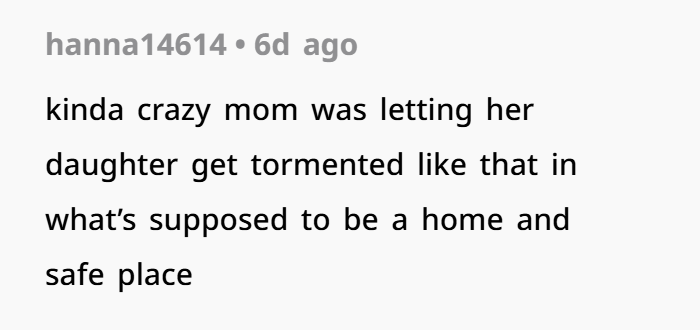
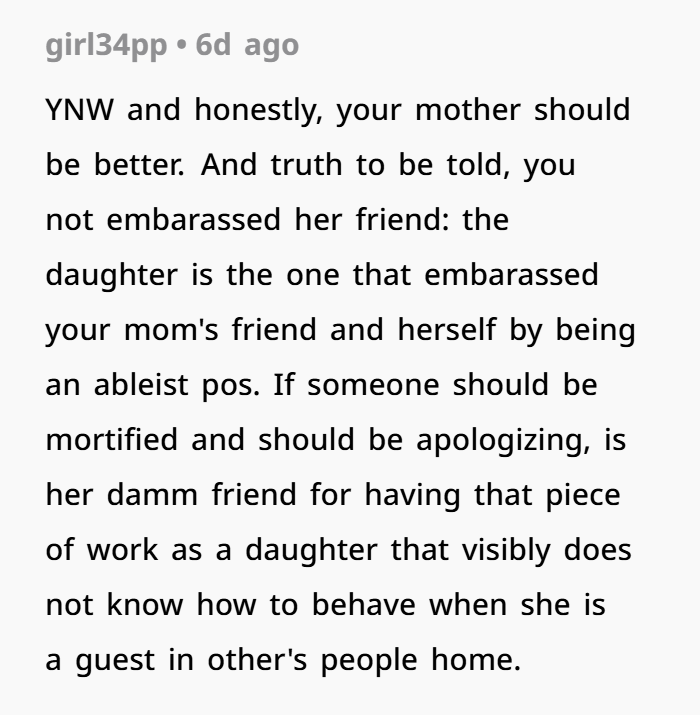
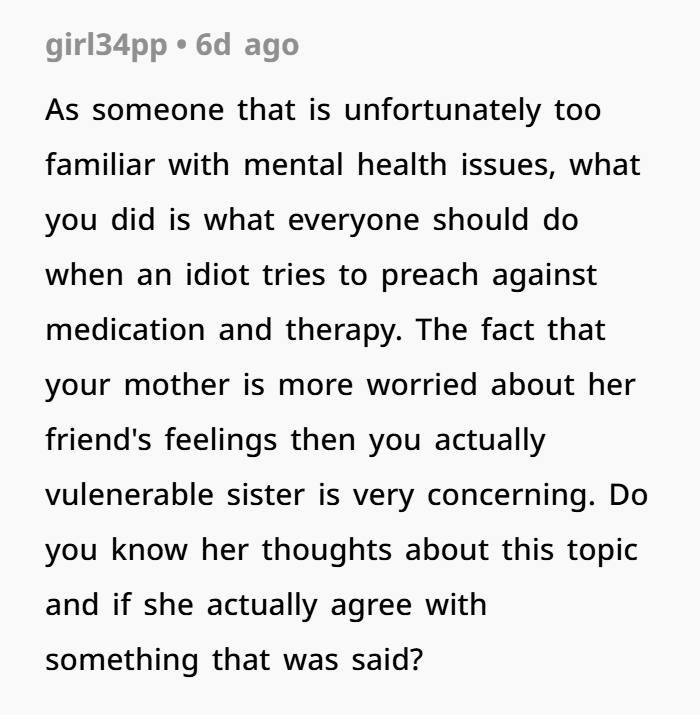
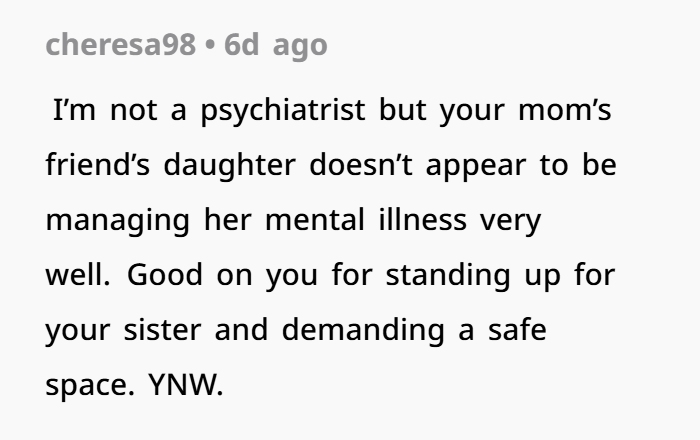
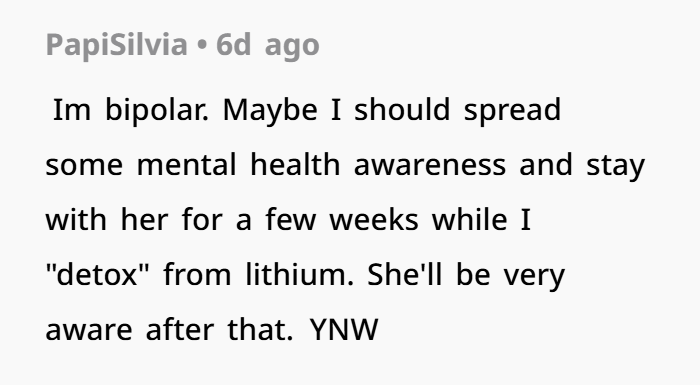
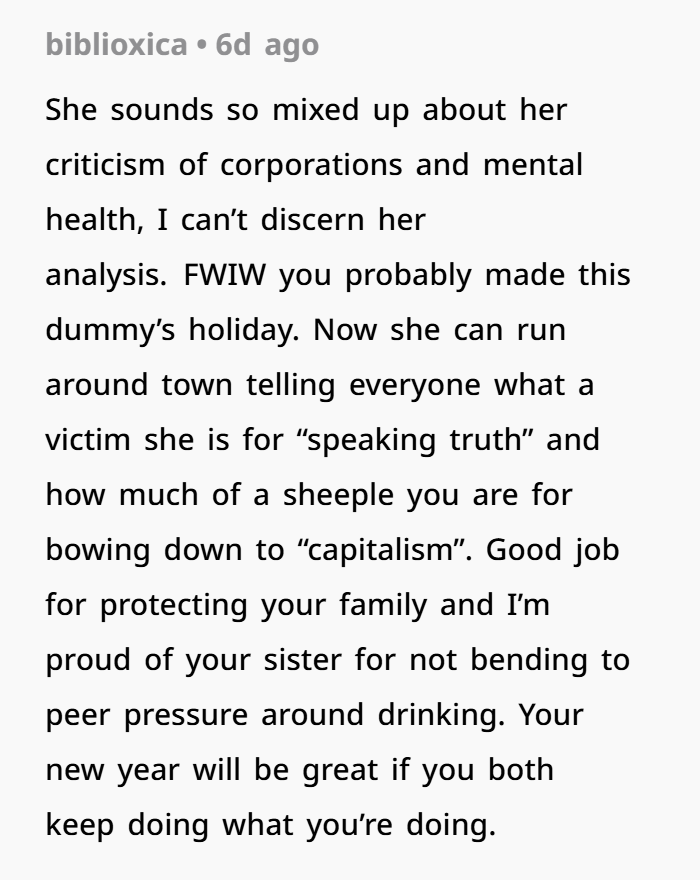
Netizens applauded the author standing up for her sister, but criticized her mother for prioritizing her appearance over the sister’s health
You are not wrong. You are not intolerant. You are not dramatic.
You were a sister who saw someone attacking your family and immediately shut it down. That’s not overreacting—that’s courage. That’s love. You defended your sister when no one else would, and you made the hard choice to protect her from emotional harm. That is what being a good sibling is all about.
If your mother can’t see that, if she’s more concerned with appearances and protecting a guest over her own daughter’s mental health, then maybe it’s time she reevaluates who really embarrassed her this Christmas.
Your actions weren’t about being “politically intolerant”—they were about standing up against harmful, hurtful behavior. What your mother failed to understand is that it wasn’t you who created the discomfort—it was the guest’s actions that led to this situation. You didn’t embarrass her; you protected your sister. And that is something you should be proud of, no matter how uncomfortable it made the situation for others. Your sister will remember your love and support long after the Christmas dinner is over.