AITA for Making My Wife Ride in the Backseat Because She Was Distracting Me?
This situation brings up a lot of important elements related to communication, emotional intelligence, relationship dynamics, and the balance between safety and feelings. Let’s break it down carefully.
1. Understanding the Root of the Issue
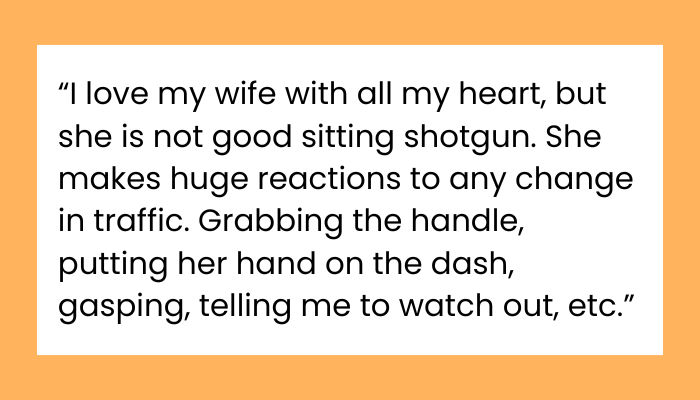
It seems like your wife’s anxiety in traffic is at the core of this problem. She’s reacting to the traffic around you in ways that feel distracting and even stressful for you. You’ve tried to explain how her reactions are affecting your driving, and while she acknowledges that she’s anxious, she says she can’t help it.
The issue isn’t that she’s anxious—it’s that her anxiety impacts your ability to drive safely, which is a serious concern. In moments of stress, especially in heavy traffic, both drivers and passengers need to focus for safety reasons. Her reactions, while not intentional, might distract you and cause tension in a high-stress situation. This is not just about feelings, it’s about physical safety.
2. The Decision to Put Her in the Backseat
When you decided to have your wife sit in the backseat with your daughter, you were trying to create a solution that balanced both her anxiety and your need to drive safely. This decision likely came from a place of wanting to keep everyone calm and focused while maintaining a safe driving environment.
However, the way this was handled could have been more sensitive to her feelings. The backseat arrangement may have felt like an abrupt or punitive decision to her, even though that wasn’t your intention. It’s important to recognize that she felt humiliated by this, which may have added emotional weight to an already stressful situation.
3. What’s Going Wrong with Communication?
Here’s the key issue: your wife’s reactions are not just about her anxiety—they also involve how you communicate around it. Her anxiety is real, but there’s a disconnect between her need for reassurance in a stressful situation and your need to focus and remain calm.
It sounds like both of you are caught in a cycle of miscommunication. You’ve expressed that her reactions distract you, but it’s also clear that she may feel like her emotional needs aren’t being acknowledged. Compassion and understanding on both sides can go a long way here.
4. Emotional Intelligence: Understanding Feelings vs. Safety
Both emotional intelligence and safety are critical in this situation. You’re prioritizing safety by trying to keep distractions to a minimum while driving. This is important, especially when driving in traffic, where quick decisions and focus are essential.
On the other hand, your wife is feeling emotionally invalidated. Her anxiety is a real part of her experience, and while it may be challenging for her to manage, it’s important for you to acknowledge her feelings of distress, rather than just focusing on the impact it has on you. Her response to being put in the backseat wasn’t just about her discomfort—it’s also about feeling like her emotional needs weren’t fully considered in your solution.
5. A Better Way to Approach This Situation
To avoid misunderstandings and minimize emotional pain, it’s essential to approach this situation with empathy and collaboration. Instead of deciding for her that she should sit in the backseat, having an open discussion about compromises and solutions could make a big difference.
For example:
- You could offer to take more frequent breaks so that your wife feels less stressed about being in the car for long periods.
- You could discuss strategies for her to manage her anxiety during the drive—whether that’s through deep breathing, calming music, or something that works for her to feel less tense.
- Alternatively, if her reactions are really distracting, maybe you could try having her talk to you about her anxiety in a more controlled, calm way rather than reacting loudly in the moment.
6. Recognizing Both Needs
While her emotional needs (validating her anxiety) are important, your need to drive safely is just as crucial. This isn’t a matter of one person’s feelings being more important than the other’s—it’s about compromise and collaboration. The goal is not to shut down or dismiss anyone’s emotions, but to find a middle ground where both partners feel respected and understood.
Conclusion: Are You the AITA?
No, you’re not the asshole. You were trying to solve a problem with the best of intentions—making sure everyone was safe and minimizing distractions. However, it’s important to recognize that her emotional needs around her anxiety weren’t fully addressed in the process.
In relationships, communication and empathy are key. When it comes to sensitive topics like anxiety or other mental health struggles, it’s vital to approach them with understanding and to make sure both partners feel heard and supported. Going forward, an open, empathetic conversation with your wife about how both of you can manage this dynamic in a way that works for both of you would be a productive next step.
When you’re behind the wheel, it’s absolutely vital that you can focus on the road. However, some passengers can make this incredibly difficult

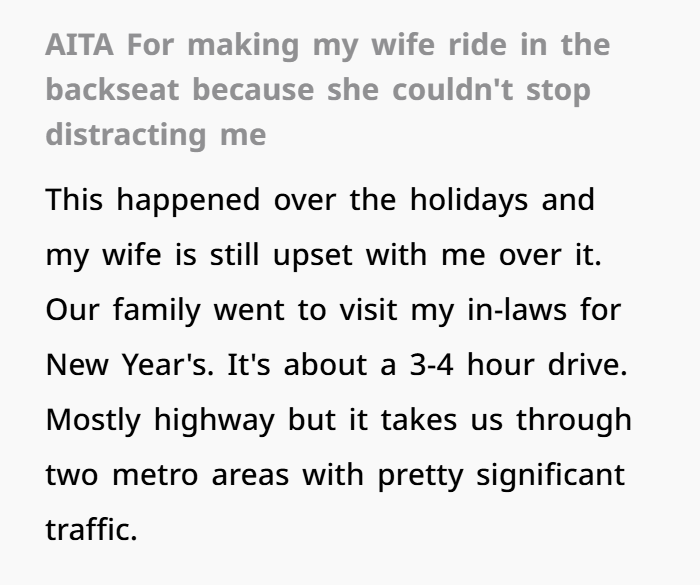
A man asked the internet if he was a jerk for asking his wife to sit in the back of the car after her distracting behavior put them in danger
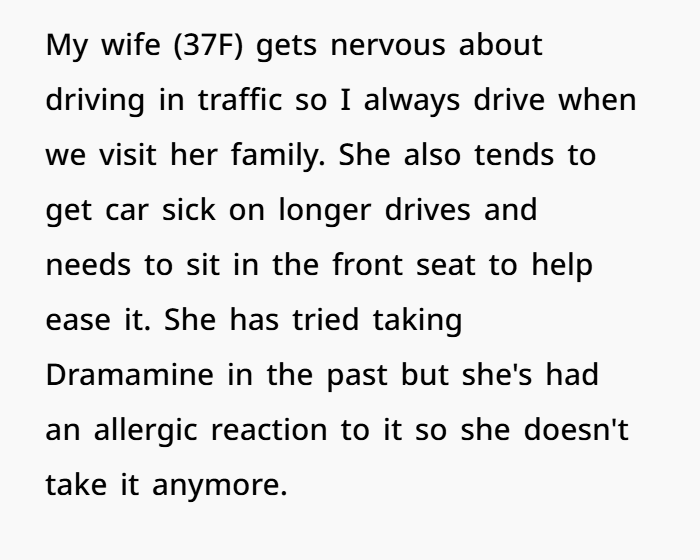
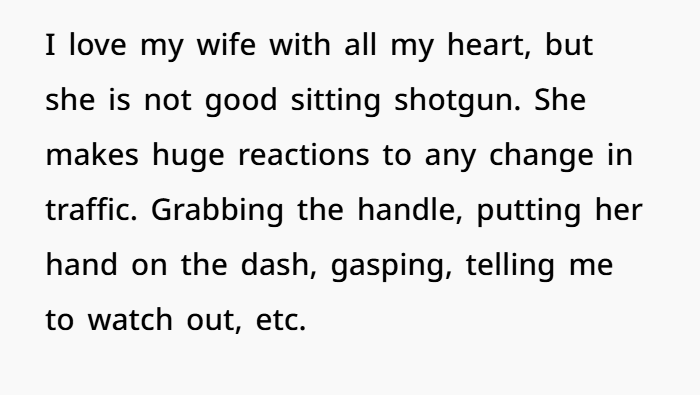
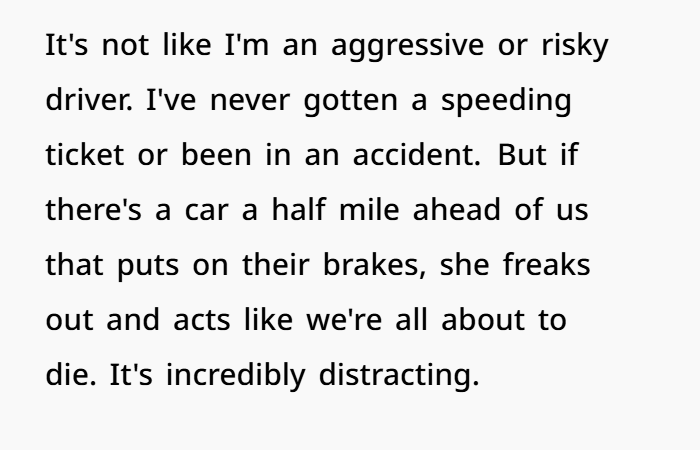
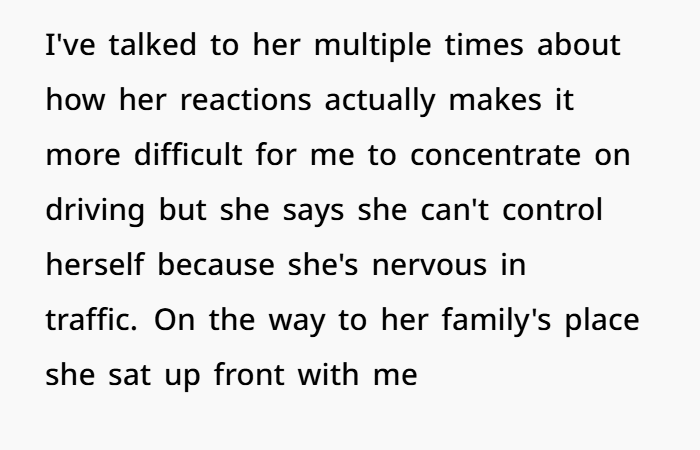

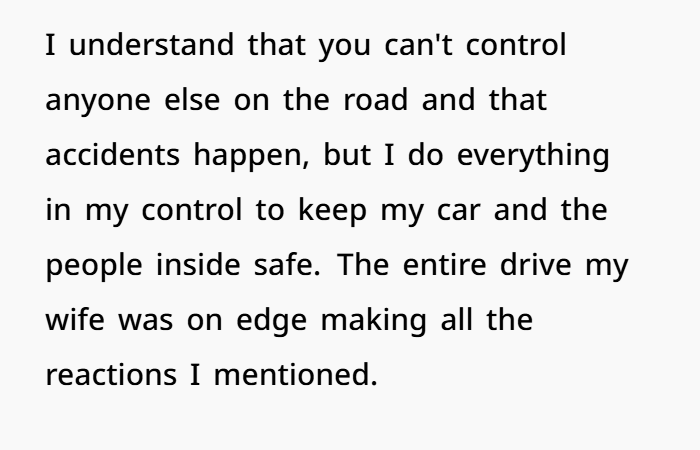
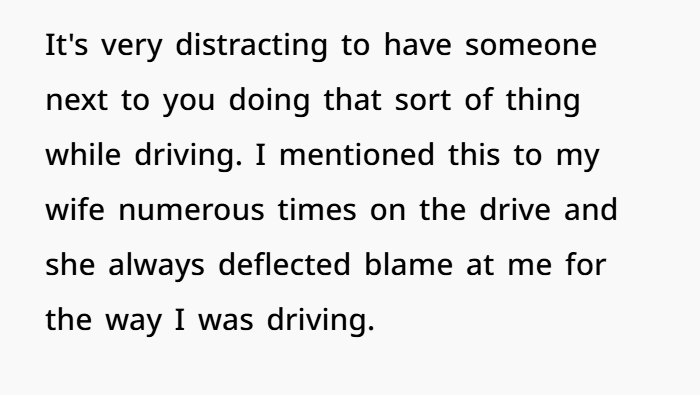
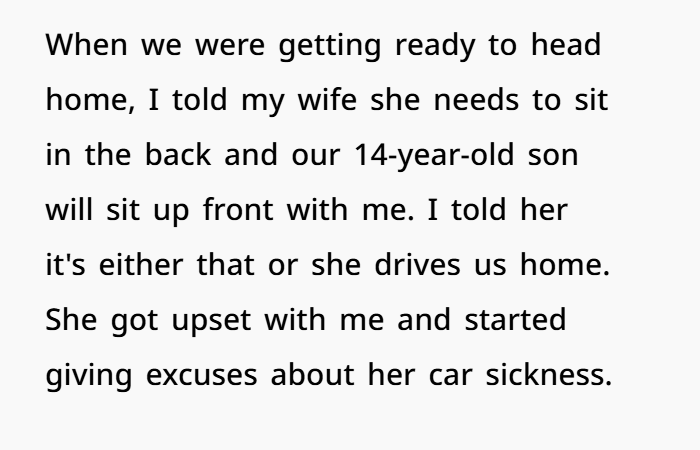
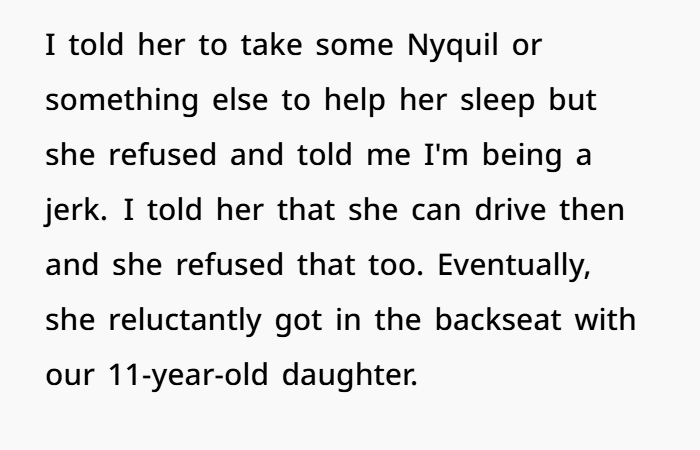
I hear you, and I completely understand your perspective. You were trying to keep everyone safe and maintain focus on the road, which is absolutely important. Your concern for the physical and emotional safety of your family, and your own mental well-being as the driver, is totally valid. It’s crucial to be focused behind the wheel, and managing distractions—whether from your wife’s reactions or anything else—isn’t just about convenience, it’s about road safety. However, there’s also another side to this situation that involves your wife’s feelings, and it’s important to acknowledge that too.
1. Safety and Driving: A Real Concern
You didn’t make the decision to have her sit in the backseat lightly. You made it because:
- You felt her reactions were distracting
- You needed to stay focused on the road
- You wanted to protect your family
- You believed it would help reduce anxiety and car sickness if she was in the back
That’s all reasonable. Driving requires unbroken concentration, especially in heavy traffic or potentially stressful conditions. Many studies show how distractions while driving can lead to accidents, so your choice comes from a place of wanting to protect everyone inside the car, including your wife. You weren’t overreacting; you were reacting to a pattern of distraction, and you were trying to ensure everyone’s physical safety.
This is safety-first thinking and addresses a real issue that can’t be ignored. Your priority was ensuring everyone’s well-being while you were behind the wheel.
2. Anxiety and Nervous Reactions
On the other side, we have your wife’s anxiety. Her reactions aren’t “just annoying”—they are the result of genuine anxiety. Whether it’s car sickness, sensitivity to movement, or general anxiety about traffic, her feelings are real and valid, even if they seemed exaggerated from your perspective.
Her experience and your experience were at odds here. You needed a calm, focused environment to drive safely, but she felt unsafe and anxious sitting in the front seat. This is a classic case where both parties are dealing with legitimate concerns—yours being safety and hers being emotional distress. It’s a difficult balance, and it’s where communication and emotional intelligence come in.
Understanding that her reactions were deeply rooted in her anxiety and fear might help frame this conversation. Her distress wasn’t just a reaction to the traffic—it was a response to her internal state, and that’s important to remember.
3. Communication Before Action
The issue here is how the decision was communicated. The lack of collaborative communication is what likely hurt her the most. When you said, “Either you sit in the back or you drive,” it might have felt to her more like a demand than a discussion.
This is where things shifted from a safety measure to something that felt more like a dismissal of her feelings. Your intention was to address the practical issue of driving safety, but the way it was communicated didn’t allow her to express her anxiety or concerns. Instead of a two-way conversation, it likely felt like a decision made without her input, which can understandably lead to feelings of humiliation or embarrassment.
Even though your intention was safety, intention without empathy can feel harsh. You were trying to manage a situation, but her emotional experience was dismissed. This is why she felt humiliated, and that’s a key part of this issue.
4. Moving Forward with Compassion
To avoid this kind of misunderstanding in the future, it’s important to create space for collaborative solutions. A more empathetic approach could involve:
- Acknowledging her anxiety and concerns: “I know traffic makes you nervous, and I get that it’s hard to feel calm with everything going on.”
- Discussing solutions together: “How can we make this easier for both of us? I need to focus on driving, but I also want you to feel comfortable.”
- Exploring alternatives: Maybe you both decide that regular breaks would help her calm down, or that the front seat is only an option for short trips, while longer drives involve some kind of compromise.
This approach shows that you respect her experience while still addressing the practical necessity of safe driving. It creates a partnership where both of you can feel heard and respected.
Conclusion
In the end, this wasn’t just about a backseat or a front seat—it’s about communication and emotional sensitivity. You were prioritizing safety, but your wife’s anxiety was real, and her emotional experience was valid. It’s essential to approach this with both empathy and clarity so that both your needs are respected. Safety is important, but so is emotional support—especially in the context of anxiety. Moving forward, making sure to communicate openly and collaboratively will help prevent these situations from becoming points of contention in the future.

want to be in the back, which, understandably, added to her emotional distress. When she felt sick and wasn’t given the opportunity to express what she needed, it compounded her feelings of being unheard. Instead of being part of the solution, she felt like she was pushed aside, and that created more tension rather than resolving the issue.
When people feel physically uncomfortable and emotionally dismissed, it can trigger feelings of vulnerability and frustration. She didn’t just feel uncomfortable in her physical space; she felt emotionally disregarded, and that’s a tough combination to deal with.
This is where emotional validation and empathy can make all the difference. She didn’t need just a practical solution; she needed to feel like her feelings were understood before trying to fix things.
7. Collaboration and Compromise: A Better Way Forward
The key to resolving conflict in relationships is not about enforcing decisions alone, but about working together toward solutions. It’s not just about finding the right spot in the car—it’s about finding the right space emotionally for both partners to feel safe, heard, and respected.
Instead of saying, “Either you sit in the back, or you drive,” a more collaborative approach would have been:
“I need a calm front seat to stay focused and drive safely. I know that traffic makes you nervous. How can we make this work for both of us?”
This invitation opens the door for her to express her needs, too, and gives you both the chance to brainstorm solutions together. It shows empathy for her anxiety while still addressing your need to drive safely. Compromise is about balancing both partners’ needs, not dismissing one for the sake of the other.
8. Moving Forward: Healthy Communication and Emotional Support
Now that both of you are aware of each other’s feelings, the next step is to build healthier communication habits around moments of stress. In any relationship, it’s important to validate each other’s emotions before jumping to solutions. This doesn’t mean you ignore the problem; it means you acknowledge the emotions behind it first, so you can both move forward together.
For example, when your wife reacts nervously in traffic, instead of focusing solely on how it distracts you, acknowledge her experience and then work on the solution. Similarly, when you’re feeling stressed by her anxiety, express your need for calm and focus without making her feel guilty about her feelings.
9. Conclusion: It’s Not About the Seat — It’s About How You Handle It
At the end of the day, this situation isn’t really about the seat assignment or the drive itself. It’s about how both of your needs—emotional and practical—are communicated and respected. It’s about emotional intelligence, validation, and finding compromises that work for both of you.
You weren’t wrong to try to make the drive safer for everyone, but how you approached it mattered just as much as the decision itself. By learning to acknowledge each other’s feelings first, you can work together to find solutions that strengthen your relationship and keep both of you feeling heard, supported, and respected.
Moving forward, it’s important to keep these principles in mind—communication isn’t just about making decisions; it’s about ensuring both partners feel valued and understood. speak up because she didn’t want to cause drama.
6. Understanding Her Discomfort and Fear of Conflict
When your wife didn’t speak up but held her discomfort, it suggests a few things:
- A fear of conflict: She may have been worried about causing tension or didn’t want to escalate the situation.
- A feeling of not being heard: If she felt like her concerns in the past weren’t taken seriously or addressed, she might have hesitated to voice her feelings.
- Previous experiences where speaking up didn’t change outcomes: Maybe in the past, when she expressed her anxiety or discomfort, it didn’t lead to better results, so she may have felt it wasn’t worth it.
This is all tied to emotional safety in relationships. She needs to feel like she can express her discomfort without fear of judgment or dismissal. If she doesn’t feel safe to be vulnerable, especially when anxious, it can build resentment and frustration. When that happens, it’s easy to see why this situation escalated the way it did.
7. Was the Move Humiliating?
From your perspective, the decision to have her sit in the backseat was a safety-focused one. You were prioritizing focus on the road to protect everyone in the car. But from her perspective, that move likely felt humiliating. She may have felt:
- Set aside: She was removed from the front seat, likely where she felt more connected and involved in the drive.
- Ignored: Her anxiety and the need for reassurance might have been overlooked or minimized.
- Infantilized: Being asked to sit in the back, especially if she felt it was a quick decision made without her input, could have felt like being treated as if she wasn’t capable of being in the front seat, even though she’s an adult.
- Embarrassed in front of the kids: Sitting in the backseat may have felt like she was put in a position of weakness, especially in front of the children.
Even though your intention wasn’t to humiliate her, that was her experience. This is where empathy and emotional intelligence become crucial. You can prioritize safety without making her feel less than, and you can communicate in a way that values both her emotional and physical needs.
8. So … Are You the Asshole?
The short answer: Not necessarily. You were acting with safety in mind, and your intention wasn’t to hurt or disrespect her.
The longer answer: Maybe. If you didn’t take her feelings into account or fully understand her anxiety before acting, then yes, there may have been a lack of emotional consideration.
In relationships, neither person is usually a villain. What often happens is that both partners could communicate better, and both may have emotional needs that weren’t fully addressed. This situation is a great reminder that the best relationships are built on understanding, communication, and emotional safety.
What this situation really reveals is that you both need better systems for communication, clearer expectations, and a stronger understanding of each other’s emotional states. With that understanding, both of you can avoid these kinds of misunderstandings in the future.
9. What You Could Do Next
Here’s a simple, empathetic response you could offer to your wife:
“I didn’t mean to humiliate you or dismiss how you feel. I was worried about driving safely, and I reacted quickly because I was stressed. I also realize now that I didn’t fully hear how anxious you are in the front seat, and I should have talked to you about it first. Can we figure out together how to handle future drives so we both feel safe and comfortable?”
This response shows:
- Acknowledgment of her feelings: “I didn’t mean to humiliate you.”
- Understanding of her experience: “I realize now that I didn’t fully hear how anxious you are.”
- Collaboration for the future: “Can we figure out together how to handle future drives?”
This approach not only expresses accountability but also opens the door for a productive conversation where both of you can voice your concerns and needs without judgment. It’s solution-focused, empathetic, and shows that you care about making things better together.
Exactly, that response is key in creating understanding between both of you. It’s empathetic and respectful, and it helps shift the focus toward solutions and collaboration—not blame. Let’s break down what that response achieves:
- Acknowledges her feelings: By saying you didn’t mean to humiliate her and recognizing her anxiety, you show empathy for her emotional experience.
- Takes some responsibility: You own the fact that you acted quickly and didn’t fully listen to her, which is crucial for building trust and showing accountability.
- Opens the door for better solutions next time: You’re proposing that both of you work together to handle similar situations better in the future, which builds a foundation for healthier communication.
- Keeps safety and emotional comfort both in view: You’re balancing the physical safety of driving with the emotional needs of your wife, which is critical for long-term relationship success.
10. Going Forward: Compromise Ideas
Here are some practical ideas that could help navigate future drives with less stress for both of you:
✅ Take Short Breaks
Stopping every hour for a short break can help her relax, stretch, and recalibrate. This gives her a chance to calm down and recenter herself, which can make her feel more in control during the drive.
✅ Sit Shotgun with a Plan
Before longer drives, talk about her nervousness and come up with a plan together. Maybe she needs to express her anxiety or talk about her triggers in a way that’s supportive, not distracting. Having a pre-set plan on how to address nerves can make the ride smoother for both of you.
✅ Grounding Techniques
Simple things like deep breathing exercises, calming music, or distraction tools like podcasts or games can help manage her anxiety in the car. These small steps can also help you stay focused while offering her a sense of calm.
✅ Rotate Seat Roles
If the driver is feeling more calm at any given time, you could switch roles, allowing her to sit in the front when it’s less likely to trigger anxiety. This way, it’s not always on you to be the one who’s handling the situation, and she won’t feel isolated in the back.
These solutions provide a win-win where safety and emotional comfort are both prioritized. They help you drive safely while offering her a sense of control and comfort during stressful moments.
Final Thoughts
At the end of the day, it’s about mutual understanding and working together to find solutions. The goal isn’t just to “fix” the situation, but to create a partnership where both partners feel supported, heard, and respected. With some clear communication and thoughtful compromise, you can both navigate future drives—and other stressful situations—with a sense of teamwork and care.
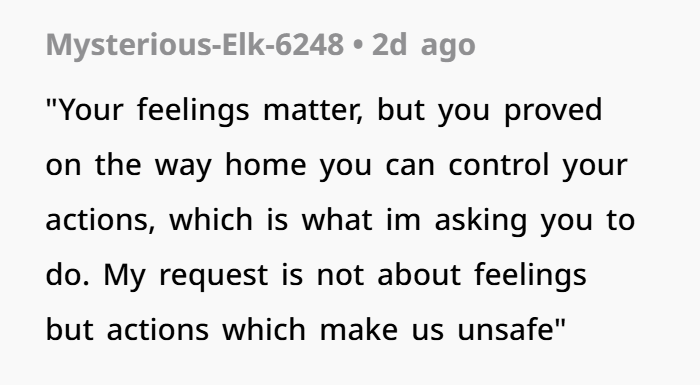
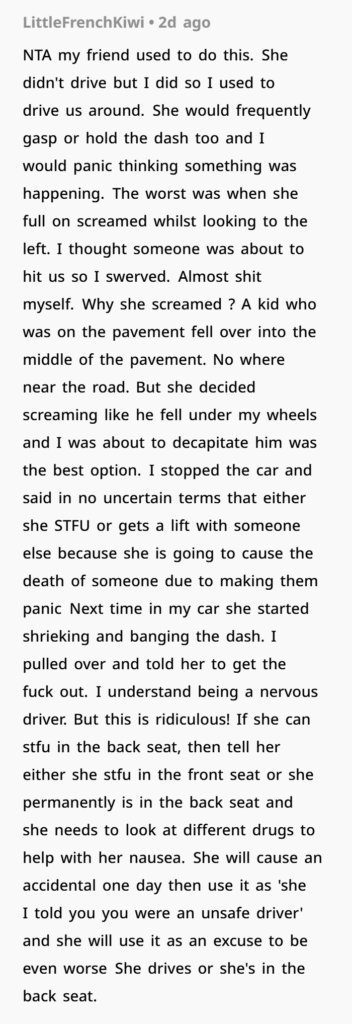
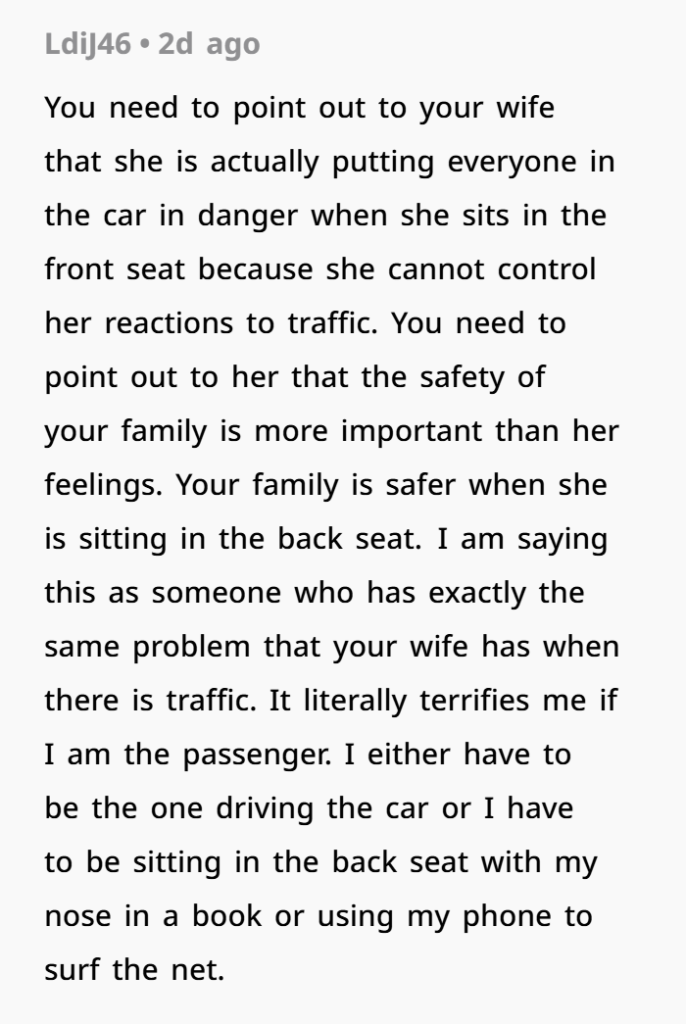
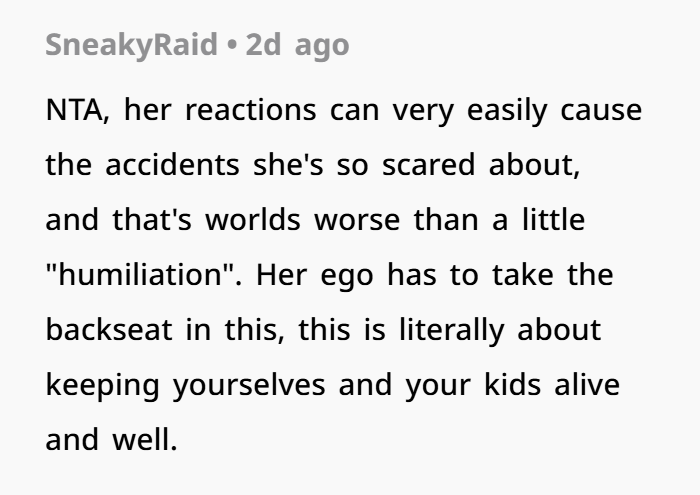
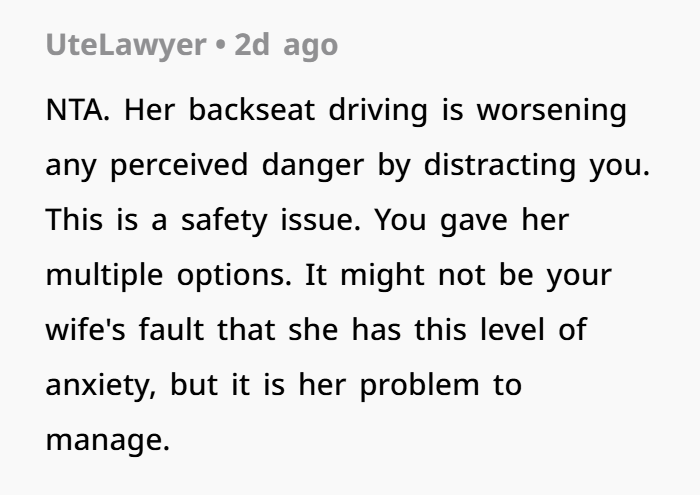
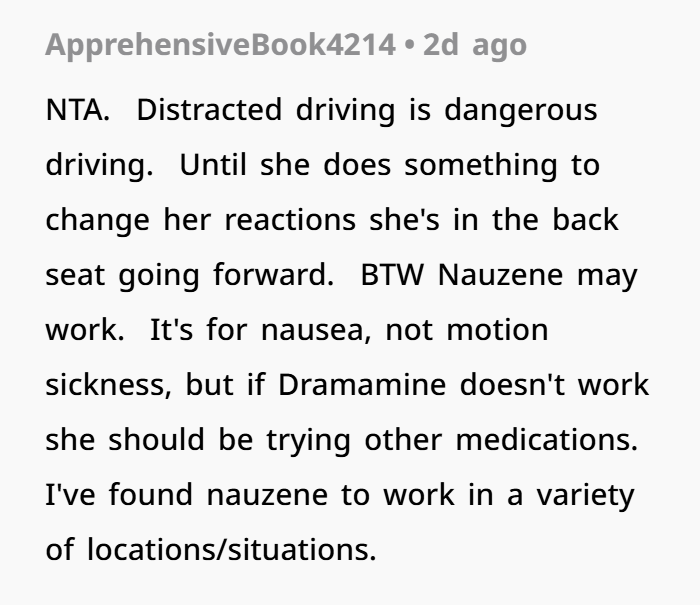
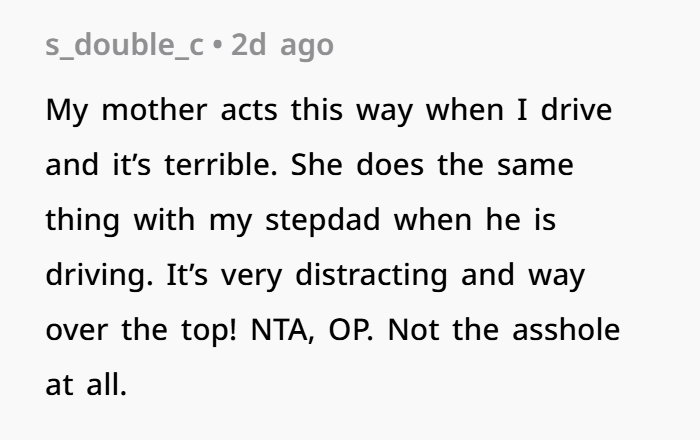
Later, the author shared more context about the situation in the comments
Exactly—you weren’t the ashole for prioritizing safety. That’s a valid concern and an important responsibility as the driver. But relationships aren’t just about handling practical matters; they’re also about emotional connection, validation, and empathy.
Your wife’s reaction wasn’t just about sitting in the backseat—it was about feeling seen, heard, and valued. When she was put in a position where her feelings and needs weren’t fully considered, it likely left her feeling disregarded, even if that wasn’t your intent. And feeling emotionally supported is just as crucial in relationships as feeling safe or practical concerns being addressed.
That’s the emotional intelligence and communication piece. You both need to feel understood and supported, especially when navigating something as stressful as anxiety on a long drive. This is where you can grow together: building a foundation of empathy and respect for each other’s emotional experiences.
If you focus on building communication and empathy, then even challenging moments like these don’t have to become power struggles. Instead, they can become opportunities for you both to work together as a team—respecting each other’s feelings while handling the practicalities of life. That’s how you make the relationship stronger, more resilient, and ultimately, more supportive for both of you.