Mom’s BF Moved In… And Ate 2/3 of My Cake Without Asking
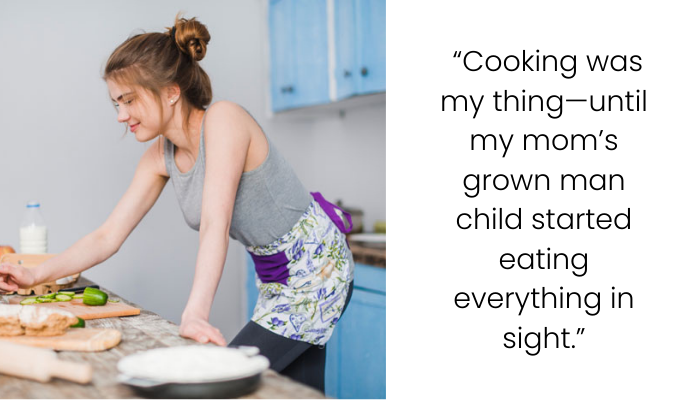
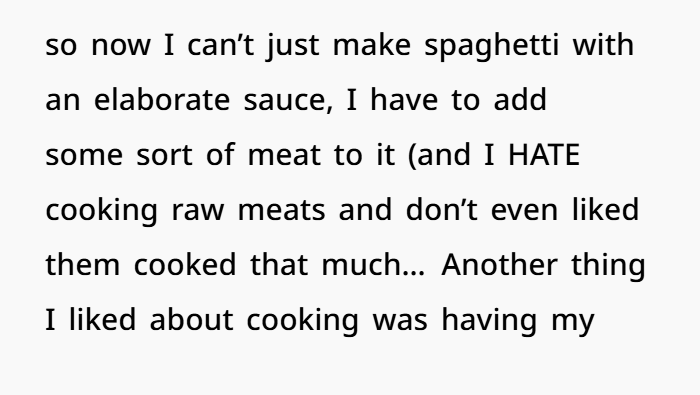
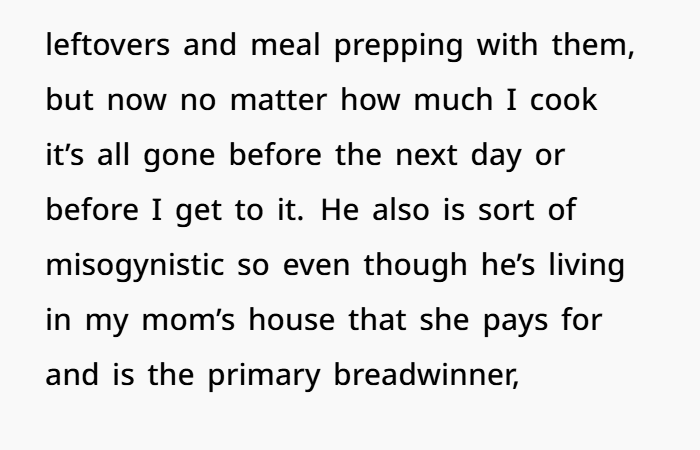
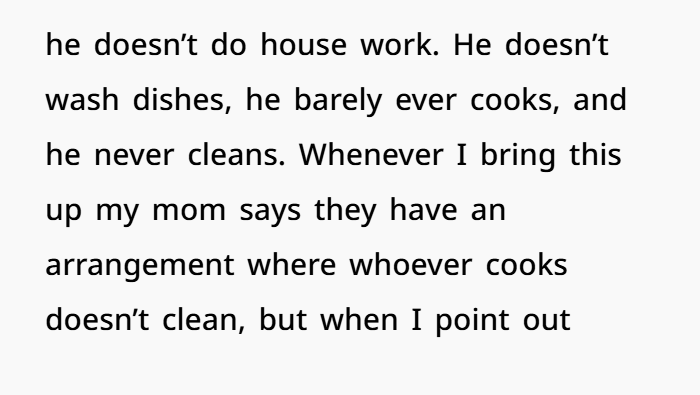
For this 17-year-old Redditor, cooking used to be a fun and creative outlet, as well as a way to prep meals. But everything changed when her mom’s boyfriend moved in. The man, in his 50s, not only has a huge appetite but eats more than everyone else combined. He’s even helped himself to her leftovers without asking, including almost an entire cake she’d made for herself. On top of that, he insists on having protein-heavy meals, which she doesn’t enjoy cooking, and refuses to contribute to household chores. Her mom continually makes excuses for him, leaving OP feeling overworked, unheard, and frustrated in her own home.
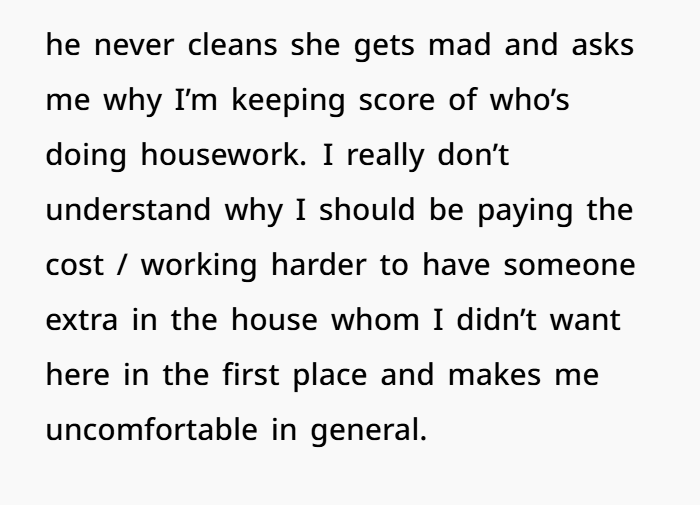
What started as a simple effort to cook for herself and her mom has now turned into a thankless job of feeding a man who neither contributes, nor cleans up, nor respects boundaries. Despite voicing her discomfort, her mom defends the boyfriend’s behavior and dismisses her feelings. This has left OP questioning why she’s stuck doing extra labor for someone she didn’t ask to live with and who makes her feel uncomfortable.
Some people love to cook, but it can become a chore, even for them, if they are expected to do it all the time for entitled folks

The seventeen-year-old poster explained that ever since her mom’s boyfriend moved in, she was forced to make much more food to cater to his demands
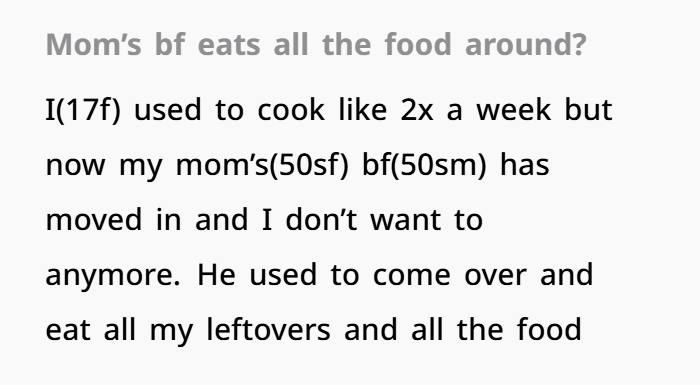
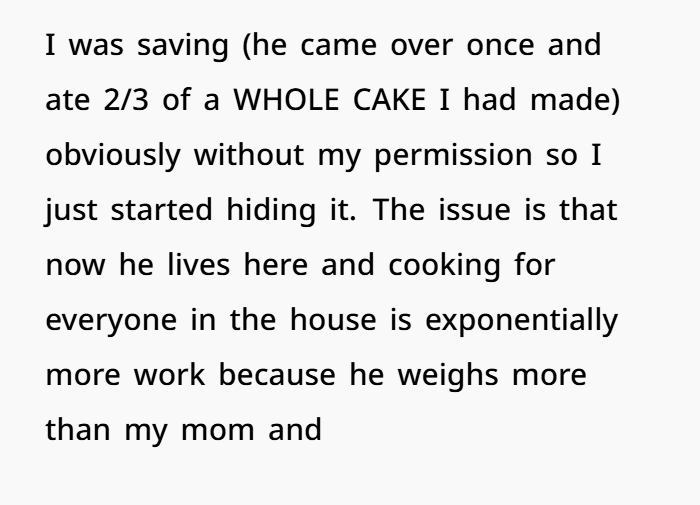
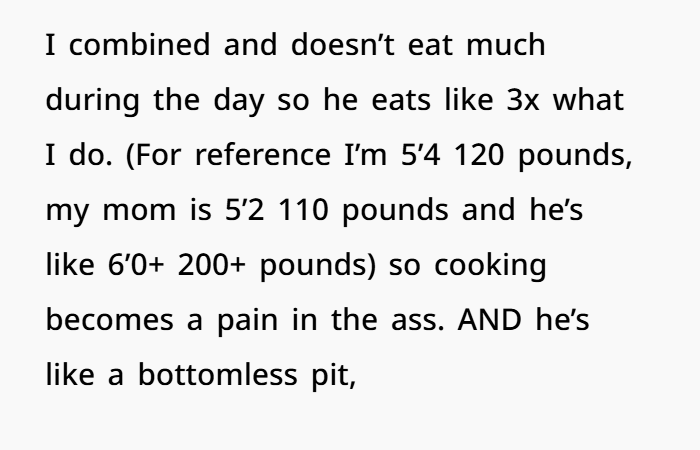
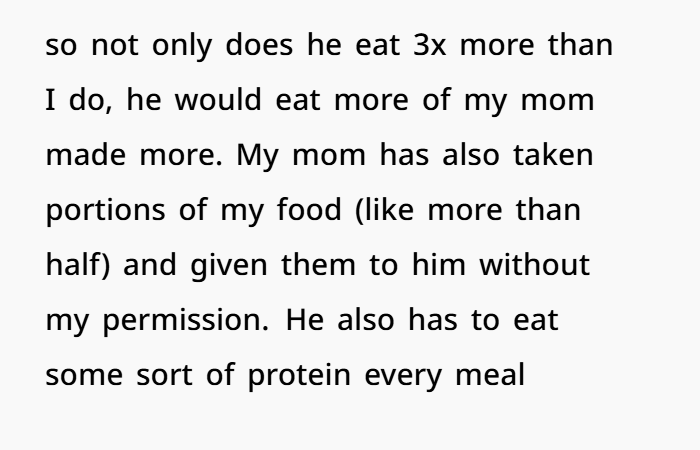
food without asking, it’s not just about being selfish or inconsiderate. It’s a way of violating personal space and disrespecting boundaries—and it can leave you feeling powerless in your own home. It’s about taking something that was yours and making it seem like it doesn’t matter, which can feel especially painful when you’ve put time, effort, and care into preparing it for yourself.
In this case, the boyfriend eating an entire meal’s worth of leftovers or helping himself to an entire cake without permission is more than just a food issue. It’s a boundary issue. He’s disregarding the boundaries you’ve set around your personal belongings, and instead of respecting your space, he’s imposing his own wants and desires onto you. When you’re already feeling overworked and underappreciated, having someone constantly take from your emotional reserves—even if it’s just food—can create a deep sense of resentment.
1. The Impact on Domestic Labor
What started as a simple effort to cook meals for herself and her mom has turned into a thankless job of feeding someone who doesn’t pitch in or show respect. The imbalance in domestic labor—with OP taking on most of the cooking and cleaning while the boyfriend does nothing—only adds to her frustration. Gender roles play a part here too. Often, women are expected to take on the bulk of household responsibilities, and when someone refuses to contribute, it deepens the sense of unfairness.
OP isn’t just cooking meals; she’s essentially serving someone who doesn’t respect her time, effort, or emotional space. And even worse, her mom defends his behavior, dismissing OP’s frustration. It can feel like she’s invisible in her own home, constantly giving and giving without any recognition or support in return.
2. The Power Dynamics at Play
When a non-parental adult moves into the household, it can create a power imbalance that’s hard to navigate. The boyfriend, as an outsider, doesn’t have the same emotional or parental investment in the family dynamic as OP and her mom. Yet, he’s imposing his presence on their lives in a way that disrupts the normal rhythm of the household.
According to Dr. Hardy, when someone repeatedly asserts dominance in small ways, such as eating someone else’s food, it’s an unconscious power play. By taking food without asking, he’s asserting control over the household, not just physically, but emotionally. OP, who likely feels like she has no control over this space, can begin to feel less valued, and even resented, by the very person she is trying to please and care for.
3. Why This Isn’t Just About Food
Food in families isn’t just fuel—it’s about connection, comfort, and emotional fulfillment. When someone is repeatedly disrespecting your food, it’s not only about the physical act of eating—it’s about the emotional violation of your space and your sense of belonging. For OP, food represents more than just sustenance. It’s something she made, something she’s putting thought and effort into. When someone disregards that, it can feel like they’re disregarding you—your effort, your time, and your emotional energy.
This scenario isn’t about the boyfriend “eating too much” or even about him not liking the food—it’s about his entitlement to what OP makes and the lack of respect he’s showing for her as a person. He is taking advantage of her efforts and then sidelining her emotional needs when it comes to respect and validation.
4. Where the Real Problem Lies
At its core, this situation is about the lack of respect and balance in the household. OP isn’t being heard or validated when she expresses frustration. She’s expected to bear the emotional labor of feeding everyone while being ignored when it comes to her own needs. The boyfriend’s behavior—along with the way her mom defends him—leaves OP feeling isolated and unimportant.
This is not about a lack of communication—it’s about the deeper power dynamics and lack of empathy for OP’s feelings. The boyfriend and her mom are both dismissing OP’s emotional needs, and it’s creating a toxic dynamic in the household. OP is in a position where she has to choose between maintaining peace by tolerating his behavior or standing up for her boundaries and feeling more isolated in the process.
Conclusion: Reclaiming Control and Boundaries
OP is in a tough spot, but it’s clear that this situation needs boundaries. She needs to have a calm and firm conversation with her mom and her boyfriend about the lack of respect for her food, her labor, and her emotional needs. It’s crucial that she stands up for herself—not just as a cook, but as a person who deserves to have her boundaries respected.
Food may seem like a small issue, but when it represents deeper feelings of control, respect, and emotional validation, it’s far from trivial. The power dynamics in this family need to shift, and OP deserves to feel supported and valued in her own home. food without asking, especially after being told not to, it feels invasive.

concerns and deflect accountability. By making it seem like she’s being petty or unreasonable, the boyfriend avoids taking responsibility for his actions. It’s a classic gaslighting technique used to undermine OP’s valid emotions and make her feel like she’s the one at fault for speaking up.
1. The Cake Incident: A Symbol of Disrespect
That cake incident isn’t just about food—it’s a symbol of disrespect and entitlement. When the boyfriend ate the majority of a cake that OP had specifically made for herself, without asking, and without any remorse, it wasn’t just a mistake—it was a deliberate violation of OP’s boundaries. This act sends a clear message: “Your effort doesn’t matter to me.”
For OP, this was more than just a piece of cake being eaten—it was a representation of how her personal space, efforts, and emotional needs were being disregarded. And the fact that he didn’t even apologize for it shows a lack of respect not just for her, but for her role in the household.
2. The Burden of Unpaid Labor
The issue of domestic labor is one that is often brushed under the rug but plays a huge role in family dynamics, particularly when it falls disproportionately on women. OP finds herself in a situation where cooking and caring for the household have become her sole responsibility. She’s not just cooking one meal—she’s catering to the boyfriend’s larger appetite, making sure there’s enough food for him, and then dealing with the frustration of no leftovers for herself.
This is unpaid labor that goes unnoticed. It’s not just about the physical act of cooking; it’s about the time, the emotional energy, and the financial cost involved. And when this labor isn’t shared or even acknowledged, it creates an environment where one person feels overworked, unappreciated, and taken for granted.
3. Weaponized Incompetence: A Common Tactic
Let’s talk about the boyfriend’s weaponized incompetence. He knows how to eat but somehow doesn’t know how to clean, cook, or contribute in any meaningful way to the household. This is a classic example of weaponized incompetence, a tactic where someone pretends they can’t do something to avoid responsibility. By doing so, they leave the other person to shoulder the burden.
In this case, OP is left doing all the physical labor—cooking, cleaning, and taking care of the house—while the boyfriend takes no responsibility. It’s an exhausting cycle that wears someone down over time. This dynamic turns the house into more of a job than a home, where one person is constantly giving and the other is simply taking.
4. The Emotional Toll and Misogyny
On top of the physical and financial strain, there’s the emotional toll. OP has expressed that the boyfriend makes her uncomfortable in general and that he exhibits misogynistic tendencies. This is a red flag that shouldn’t be overlooked. Misogyny, in this context, isn’t just about hatred of women—it’s about the expectation that women will serve, tolerate poor treatment, and not voice their discomfort.
When OP tries to set boundaries or express her frustration, she’s met with dismissive comments like “why are you keeping score?” This is a tactic designed to shut down legitimate concerns and make her feel guilty for standing up for herself. It’s a control tactic that reinforces the idea that her needs don’t matter and that she should be quiet and submissive.
5. The Bigger Picture: Protecting Boundaries and Well-Being
OP is not overreacting. She is dealing with disrespect, entitlement, exploitation, and emotional manipulation. It’s exhausting, and it’s not something she should have to tolerate.
The boyfriend’s behavior is not just about food—it’s about control and disrespect. His refusal to pitch in, his disregard for boundaries, and his discomfort with OP’s pushback are all signs of a toxic dynamic that is wearing her down emotionally, physically, and mentally.
OP deserves:
- Respect for her boundaries and her role as a parent and partner.
- Support in sharing the emotional and physical labor of the household.
- Equality in how responsibilities are handled.
- Protection from emotional manipulation and gaslighting.
If these needs aren’t met, it’s okay for OP to reevaluate the relationship and determine whether this dynamic is sustainable. At the end of the day, she deserves to be treated with respect and supported, not exploited or gaslit.
Conclusion: Reclaiming Control and Protecting Well-Being
What OP is experiencing isn’t just about food—it’s about control, boundaries, power dynamics, and the emotional and physical toll that unpaid labor can take. The situation isn’t just unfair; it’s emotionally exhausting and damaging to her sense of self and well-being.
She has the right to reclaim control over her space, set clear boundaries, and demand respect. And her feelings are valid. If the boyfriend isn’t willing to change, she should seriously consider whether this relationship is the right one for her, and whether it’s possible to continue in a situation where her emotional safety and mental well-being are at stake. concerns by making the person raising them seem petty or dramatic.

What’s truly heartbreaking here is how OP’s mom is responding. Instead of standing by her daughter and respecting her boundaries, she’s prioritizing her boyfriend’s comfort. This dynamic is all too common in households where a single parent enters a new relationship, especially when the new partner isn’t attuned to the family’s existing needs or dynamics.
When a new partner, like OP’s mom’s boyfriend, doesn’t show respect for the established boundaries of the household, kids (even older teens) can easily feel displaced, unheard, and like they don’t matter. OP is not just facing disrespect from the boyfriend; she’s also dealing with her mom’s refusal to back her up, leaving her in a position where her needs and boundaries are constantly overlooked.
1. OP’s Right to Autonomy in the Kitchen
From a legal and ethical standpoint, OP has the right to say no when it comes to cooking for someone who is not respecting her space or her needs. Cooking for herself and her family used to be something she enjoyed, but now it feels like an obligation for someone who’s not pulling their weight. Her autonomy in the kitchen should be respected, especially considering she’s the one who’s doing all the emotional and physical labor.
Even though OP is a minor, that doesn’t mean she should be used as unpaid labor by someone she didn’t choose to live with. She didn’t invite this man into their lives, and it’s unfair that she is expected to carry the weight of making meals for him, especially when her boundaries have been repeatedly crossed.
2. OP’s Instincts Are Right
The fact that OP recognizes something is off—that she’s doing extra work, that her boundaries are being ignored, and that her mom is brushing it all under the rug—is incredibly important. OP is not internalizing the guilt and blame that often come with these situations. She’s recognizing that something is wrong and that she has the right to stand up for herself.
This is the heart of what’s important: OP is protecting something that once brought her joy (cooking) and is trying to preserve her autonomy in her own home. That’s worth standing up for. It’s normal to feel frustrated, hurt, and even resentful when your personal space and efforts are being disregarded. OP has every right to feel those emotions, and it’s important that she recognizes them as signals that she needs to reassert her boundaries.
3. The Importance of Setting Boundaries
By trying to set a boundary with her mom and her boyfriend, OP is taking a big step toward protecting her mental health and emotional well-being. Boundaries are essential, and when they’re constantly disregarded, it erodes a person’s sense of control and worth. In this case, OP is trying to maintain her sense of autonomy—which is necessary for her self-respect and sense of self.
What OP is doing isn’t dramatic or unreasonable; it’s a healthy response to a situation where she’s being unfairly burdened with extra labor and emotional strain. It’s a sign that she values herself and her boundaries enough to speak up and protect her emotional space.
4. Protecting Family Dynamics
This situation also underscores the importance of family dynamics—especially when a new partner enters the picture. OP’s mom should be the one advocating for her daughter. Instead, she’s creating a dynamic where OP feels unseen and undervalued, while the boyfriend is given a free pass to disrespect her boundaries.
OP’s mom needs to recognize that protecting her daughter’s needs doesn’t mean alienating her boyfriend. It means ensuring that her daughter feels safe, valued, and respected in her own home, and that her voice matters in any family decisions. If this pattern continues, the family dynamic will only become more toxic.
5. The Bigger Picture: Self-Worth and Respect
What OP is doing here—standing up for herself and protecting her space—is crucial for her sense of self-worth. She has the right to stand up for what she needs and not accept being taken advantage of, especially when it comes to her emotional and physical labor.
By maintaining her boundaries in the kitchen and rejecting the idea that she’s the family servant, OP is learning to assert her needs and protect her mental health. These are important skills that will serve her in many areas of life—not just in this relationship with her mom and boyfriend.
Conclusion: You’re Not Asking for Too Much
OP, you’re not asking for too much by wanting to maintain your boundaries and protect your autonomy. You deserve to feel respected in your own home, and it’s unfair for anyone—especially a family member—to undermine that. It’s heartbreaking that your mom isn’t supporting you in this, but your instincts are guiding you in the right direction.
Setting and enforcing boundaries in this situation isn’t just about keeping peace; it’s about self-respect, autonomy, and preserving your mental health. Keep standing up for yourself and don’t let anyone, even family, cross those boundaries. You have the right to demand respect, and that’s a powerful step toward reclaiming your space and well-being.
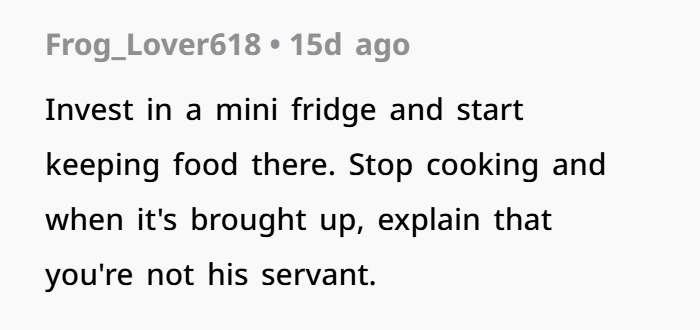
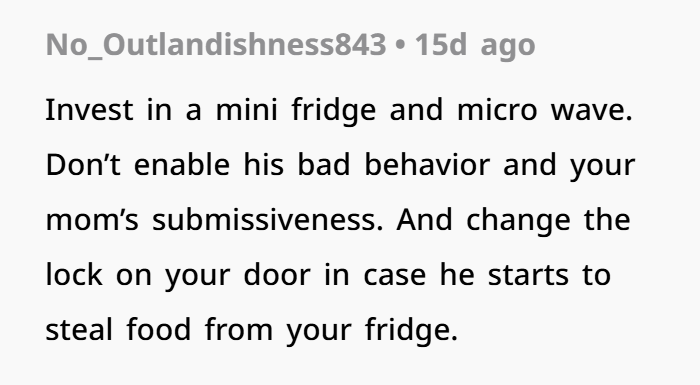
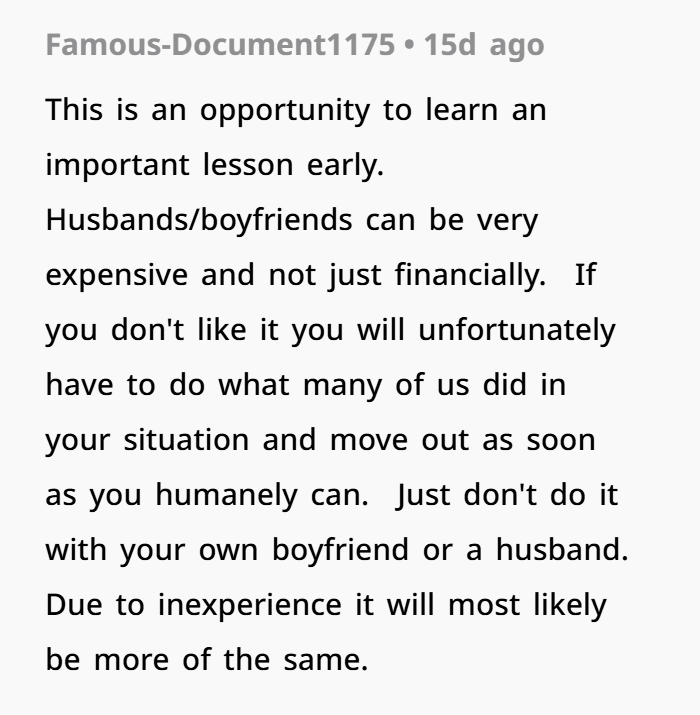
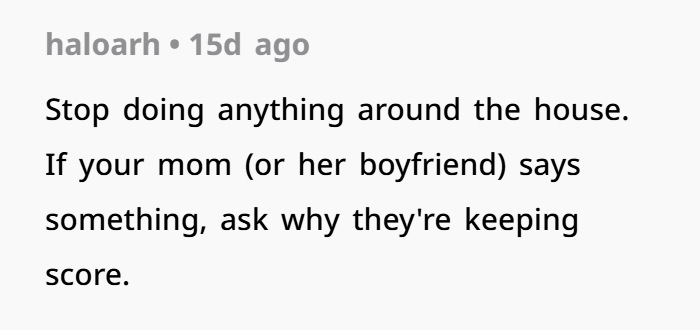
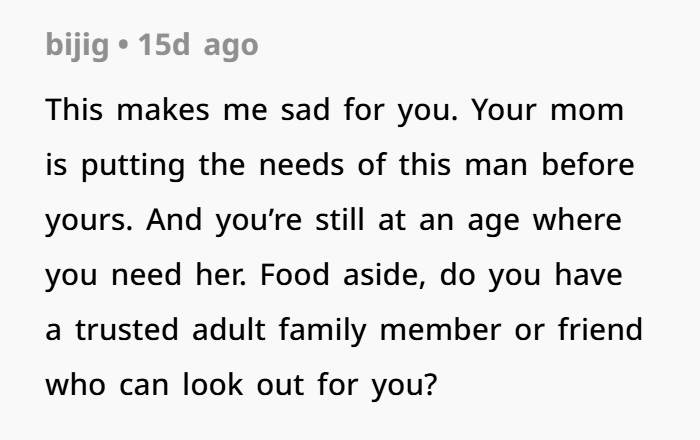
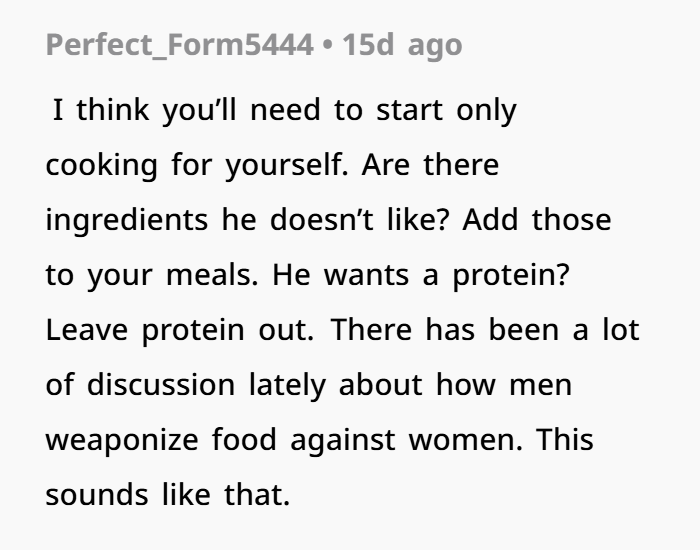
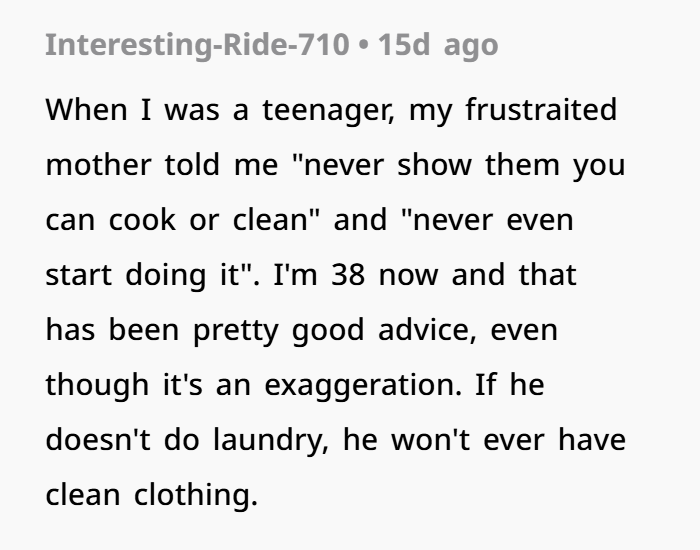
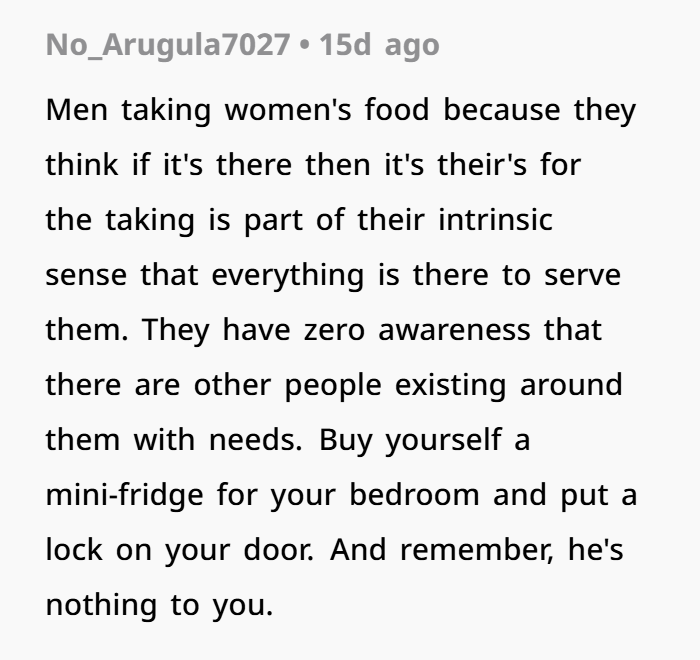
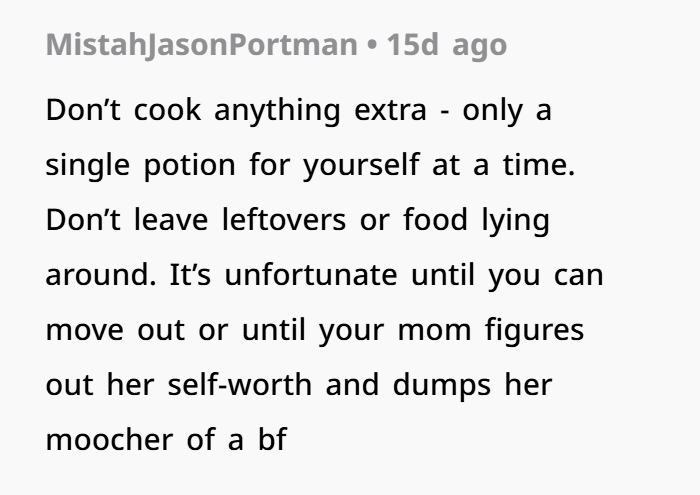
Netizens rallied around the poster and gave her creative suggestions to get her mom’s boyfriend to stop eating her food
Here are some practical steps OP might consider to protect her boundaries and well-being:
1. Stop Cooking Unless She Wants To
This one’s simple but powerful: stop cooking unless you feel like it. OP doesn’t owe anyone meals, especially when she’s being disrespected. She shouldn’t be expected to cook for someone who doesn’t respect her time, effort, or personal space. If she feels burdened or taken for granted, the solution might be to take a break from cooking unless she wants to. It’s a way to put control back in her hands and set a clear boundary.
2. Label and Hide Food She Wants for Herself
Since the boyfriend keeps eating her leftovers without asking, label and hide food that OP wants to save for herself. If necessary, she could keep her portions in separate containers or even in a locked space—whatever works to ensure she can have her own meals when needed. It’s not petty; it’s protecting her right to food that she worked for and put effort into.
3. Have a Calm Conversation with Her Mom
This is a tough one, but having a calm conversation with her mom (ideally when the boyfriend isn’t around) is crucial. OP should reassert how her mom’s boyfriend’s behavior is making her feel and why it’s upsetting. This conversation should focus on how OP is being disregarded in her own home and how her needs for respect and autonomy are not being met. It’s important that OP expresses her emotions clearly so her mom understands how serious this is. Clear, calm communication can sometimes help open the door for change.
4. Document Incidents
OP should consider documenting incidents where her boundaries are crossed, even if it’s just for her own clarity. Writing down when things happen can help validate her feelings when situations feel confusing or when she starts to feel gaslit. This way, OP can have a record of what’s been happening and refer back to it if the situation escalates or if she needs to show patterns of behavior to her mom or a trusted adult.
5. Seek Outside Support
If things continue to feel overwhelming or if OP feels like she’s being dismissed by her mom, she should seek outside support. Whether that’s a trusted adult, school counselor, or even online spaces like Reddit, getting advice from someone who isn’t emotionally invested can help OP gain clarity and perspective. Speaking with someone who can offer objective advice might help her feel less alone and give her the tools to address the situation more effectively.
6. Advocate for Respect and Safety
At the end of the day, no teenager should be expected to take on adult responsibilities, especially when they’re being disrespected in their own home. OP isn’t just asking for more food or less responsibility in the kitchen. What she’s asking for is to be heard, respected, and safe in her own space. She’s asking for a healthy family dynamic, where her boundaries are respected, and her needs are considered just as important as anyone else’s.
That’s more than fair. Everyone in a household, especially family members, deserves to feel safe, valued, and respected. OP’s desire to protect her emotional and physical space is valid, and she has every right to advocate for herself.