He Proposed Because He Thought I Was Pregnant?! AITA for Rethinking It All?
This situation is both deeply confusing and emotionally charged, and it raises some serious concerns about trust, communication, and motivation within the relationship. Let’s break this down carefully and explore the issues at play.
1. The Public Confrontation and Its Impact
First, the way the confrontation unfolded is important. Not only did your fiancé scold you publicly—which is embarrassing on its own—but he misunderstood the situation and incorrectly assumed you were pregnant. Being put on the spot like that, in front of his family, must have made you feel shamed and isolated. It also made it clear that there is a serious lack of communication between the two of you.
You were caught completely off-guard by his assumption, and it’s understandable that you’d feel shocked and hurt. This isn’t just about him misunderstanding the situation—it’s about him making assumptions without checking the facts first and, perhaps more importantly, doing it in front of others in a way that undermined you.
2. The Issue with His Motivation for Proposing
The core issue that needs to be addressed is the motivation behind your fiancé’s proposal. It seems that he made a major life decision—proposing to you—based on the assumption that you were pregnant, rather than out of a desire to commit to you as a person, regardless of circumstances. If he truly thought you were pregnant and proposed as part of a plan to “do the right thing,” that raises serious questions about his intentions and how he views the relationship.
Did he propose because he wants to build a future with you, or was it more about doing the “right thing”? This is a fundamental issue that needs to be addressed. His focus on stepping up because of a pregnancy, rather than seeing you as a person he loves and wants to marry, can make you feel like you were just part of a reaction to an assumption rather than a genuine desire for a shared future.
3. His Reaction: Avoiding Responsibility
The fact that he hasn’t been upfront about his assumptions is concerning. Instead of asking you if you were pregnant or discussing his concerns with you directly, he jumped to conclusions and proposed as a result. It shows a level of avoiding responsibility and acting impulsively. Relationships thrive on communication, and this situation points to a lack of clear dialogue between the two of you.
It’s possible he believed that he was doing the right thing, but this type of decision-making based on assumptions (and without consulting you) shows a lack of respect for your autonomy and decision-making. This is especially troubling because his actions seem driven more by a need to be seen as a responsible partner than by any real understanding of who you are as a person.
4. The Impact on Your Relationship and Future
The biggest question you have is whether he truly wants to build a life with you, or if you’re just the person he feels obligated to be with because of his assumption. That’s a huge concern.
If you’re unsure whether he wants to be with you because he loves you or because he thinks it’s the “right thing to do,” it’s essential to talk about the future. What does he see for the two of you going forward? Does he envision a life with you, whether or not there’s a pregnancy involved? Or is his decision solely based on an assumption that you’re expecting?
5. His Mother’s Influence: Navigating External Pressure
It’s also important to consider the pressure coming from his mother, who is urging you to “work things out.” While she may have good intentions, this external pressure can complicate your decision-making process. She’s not the one who’s being affected by his behavior, and her influence might make it harder for you to see the situation clearly.
You need to prioritize what you feel is right, not just what others expect. The decision to stay or leave should be based on what is best for you and whether you feel that this relationship is one where you can grow, communicate openly, and be loved for who you are—not just as part of a reaction to a mistaken assumption.
6. What You Should Do Next
- Have an Honest Conversation: You need to have a calm and open conversation with your fiancé. Ask him directly why he proposed to you. Was it out of a genuine desire for a future together, or was it because he assumed you were pregnant? This is an essential conversation for understanding where both of you stand and what his intentions are.
- Reassess the Relationship: Take time to think about the future of this relationship. Do you feel secure in your fiancé’s love and commitment to you, or do you feel like a decision was made out of obligation? Is this a partnership where you feel respected and valued as a person, or are there serious imbalances in terms of how you both view the relationship?
- Address the Public Shaming: Talk about how his public scolding made you feel. His assumption was one thing, but the way he handled it in front of family was not only embarrassing—it was disrespectful. This conversation can clarify how you both communicate when things go wrong and help prevent misunderstandings in the future.
- Seek Support: Whether from a therapist, trusted friend, or family member, talking to someone who can offer an objective perspective might help you see things more clearly and figure out what you need going forward.
7. Conclusion: You Deserve Clarity and Respect
You deserve to be with someone who values you for who you are—not because of assumptions or obligations. This situation, while painful, is a valuable opportunity to reassess the relationship and ensure that the future you build is one of mutual respect, understanding, and love. It’s not unreasonable to want clarity, and you absolutely deserve to know that your partner wants you for the right reasons.
Being told you’re pregnant when you’re not must be a confusing feeling

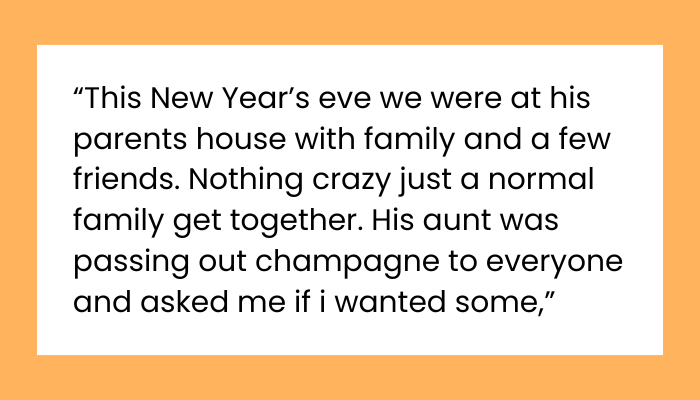
So one woman ended up questioning her relationship after her fiancé was angry she drank at a party
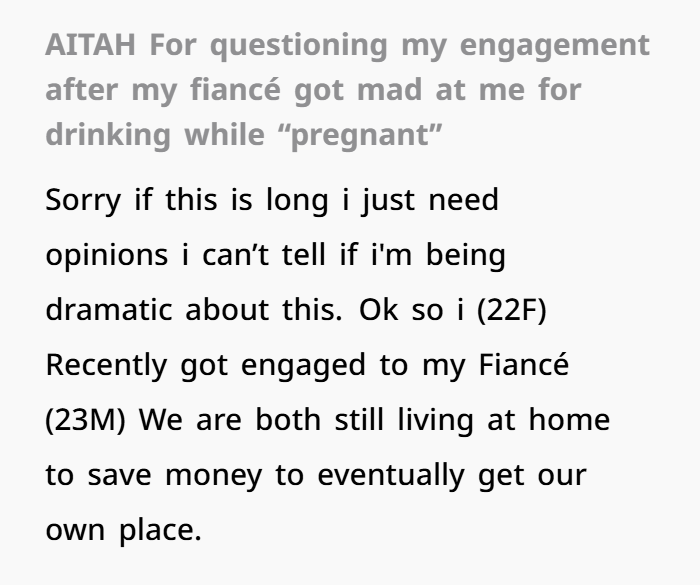
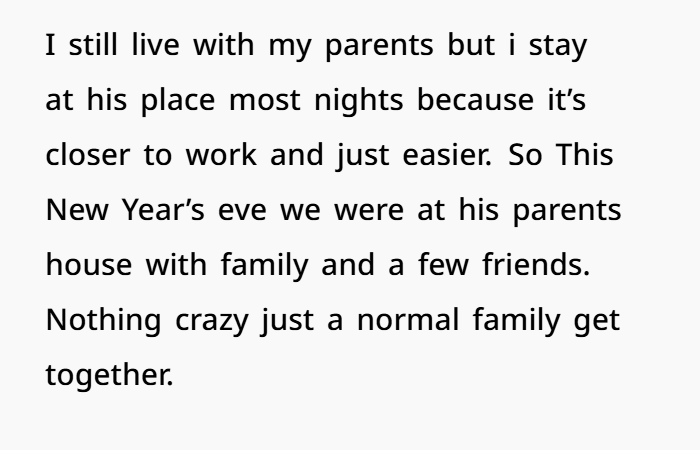
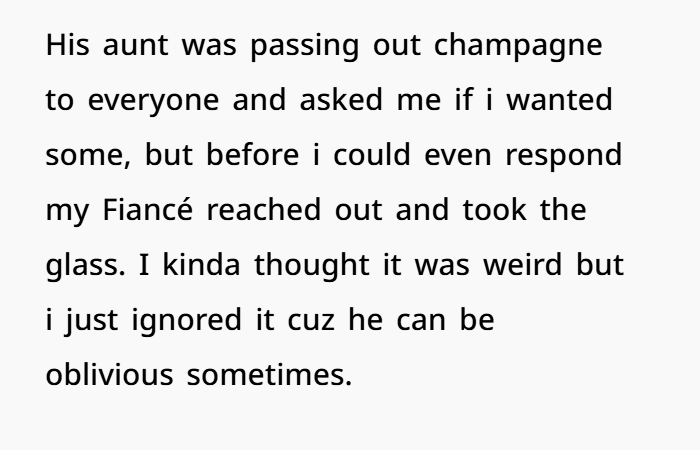
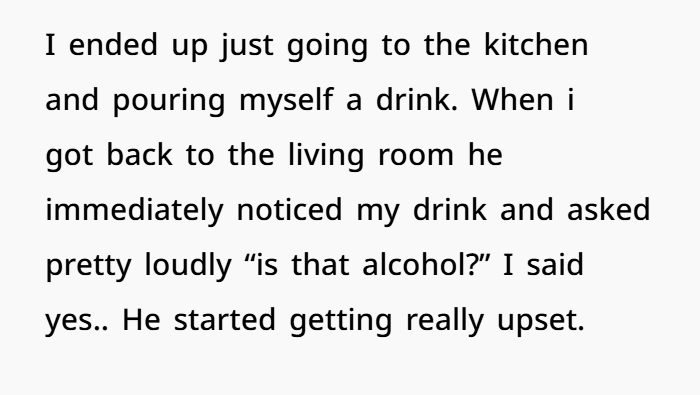
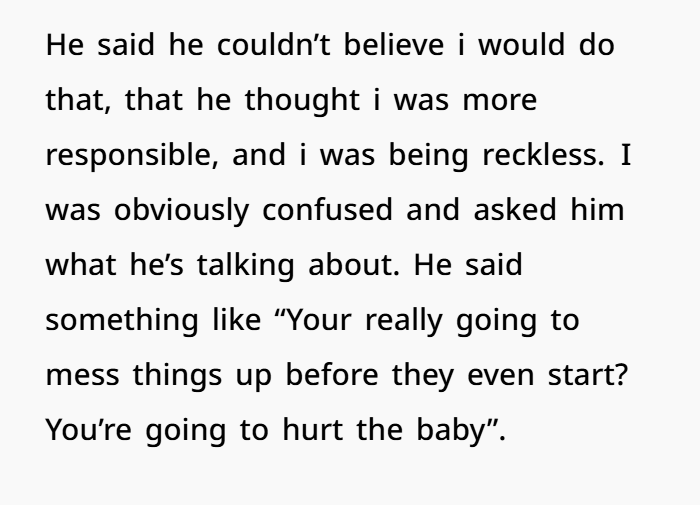
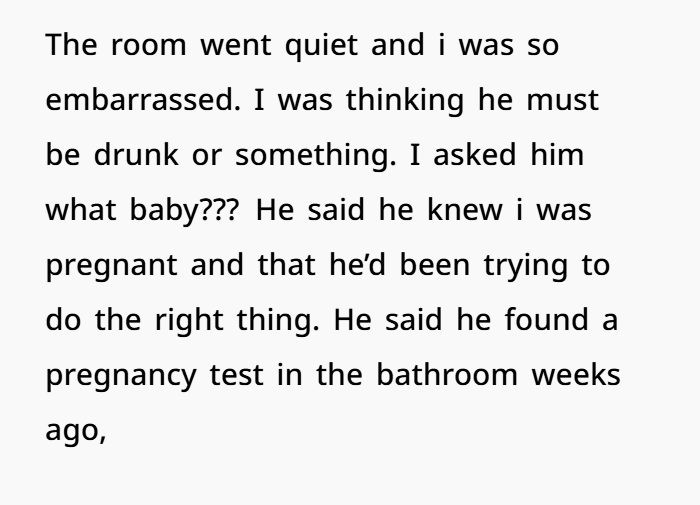
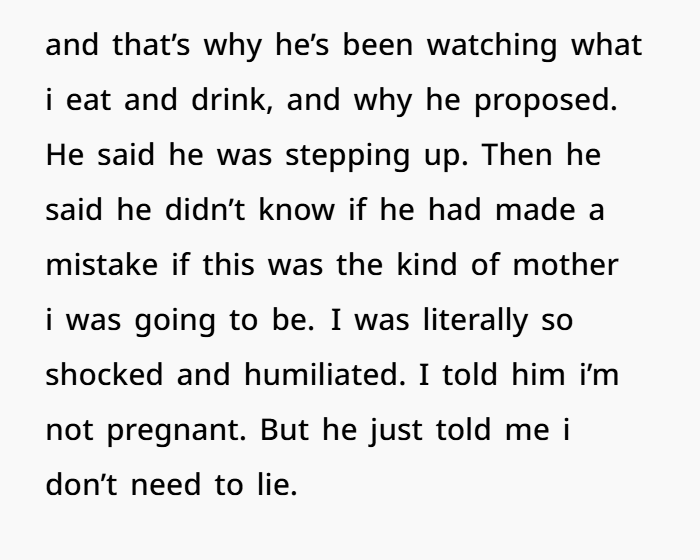
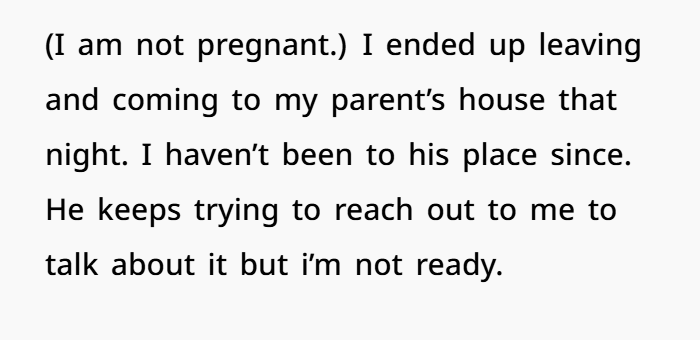
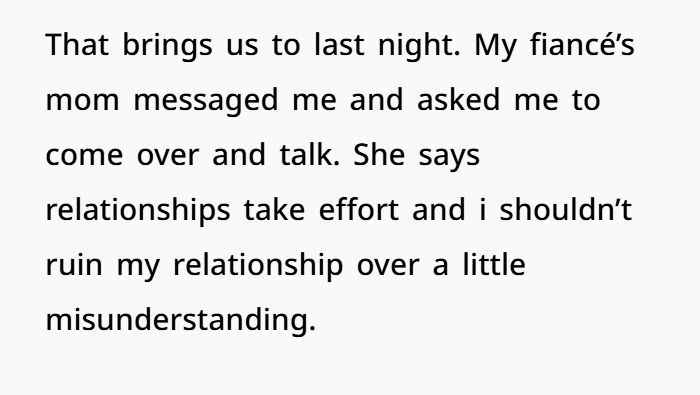

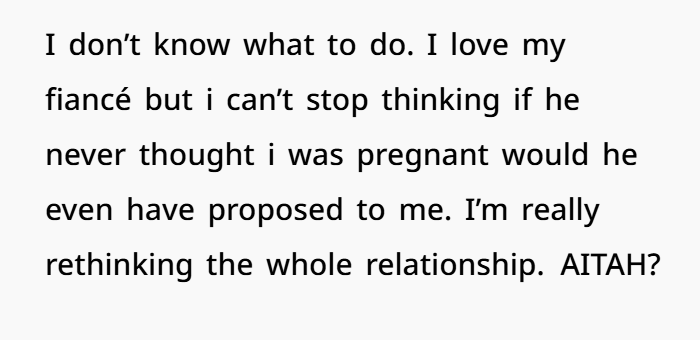
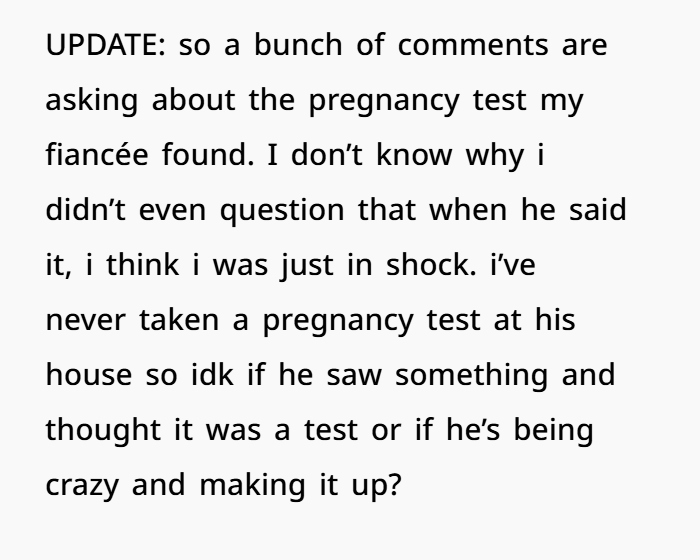
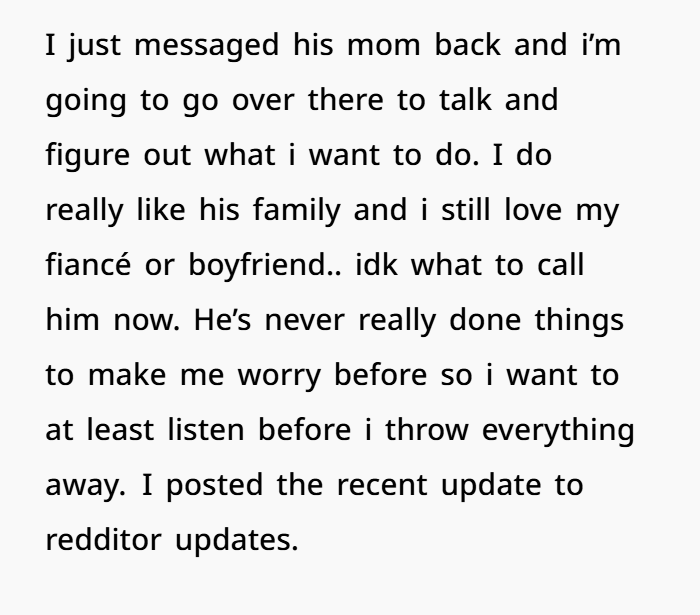
This story brings up a lot of important topics around engagement, trust, pregnancy assumptions, and emotional boundaries. While it’s easy to get caught up in the drama of it all, let’s break this down — because there’s a lot more going on here than just a misunderstanding.

1. Pregnancy Assumptions and Bodily Autonomy
One of the most crucial aspects of this situation is the assumption of pregnancy. Pregnancy is a huge life event, and assuming someone is pregnant without clear communication is a violation of trust. The fiancé’s decision to propose based on an assumption (that OP was pregnant) rather than actual communication about the future of their relationship is problematic.
This assumption doesn’t just highlight a lack of trust in the relationship, it also overrides OP’s autonomy and parental control. Instead of asking OP or discussing the future based on mutual understanding, the fiancé acted on a misconception. It suggests that, rather than building a relationship based on love and mutual agreement, the fiancé made a decision rooted in obligation, not romance.
2. Public Confrontation and Emotional Boundaries
The way this situation played out in front of family is also significant. Being publicly scolded for something so personal can leave anyone feeling humiliated, especially when the issue is based on a misunderstanding. The public shaming of OP not only made her feel embarrassed, it also violated her emotional boundaries. A personal matter about pregnancy should have been discussed privately, but instead, the fiancé chose to scold her in front of others.
This type of emotional violation can create resentment and distort the power dynamics in the relationship. OP might now be questioning her fiancé’s ability to respect her boundaries, particularly when it comes to confidential matters. Trust is built on the understanding that each person’s emotional needs and privacy will be respected, but this public confrontation shows a lack of that consideration.
3. The Motivation Behind the Proposal: Love or Obligation?
The most pressing question that OP is dealing with is the motivation behind the proposal. If her fiancé proposed because he believed she was pregnant, that suggests he was acting out of a sense of duty—to “do the right thing”—rather than a genuine desire to marry her. This is a serious concern for OP, because it implies that he may not be thinking of her as a partner he wants to build a life with; rather, she could be seen as someone he feels compelled to commit to because of the assumed pregnancy.
True love and commitment should come from a place of wanting to build a future together based on mutual respect, care, and understanding. If the motivation behind the engagement is solely reactionary to a pregnancy assumption, it creates a power imbalance and puts OP in a position where she feels like a responsibility rather than a choice. That’s a key issue that needs to be addressed.
4. The Role of Communication and Decision-Making
This entire situation highlights the lack of communication between OP and her fiancé. If he truly felt concerned about the pregnancy, he should have approached OP directly and asked her about it, rather than making assumptions and acting on them. Instead of being open and direct about his thoughts, he made decisions for both of them without checking in first.
Clear, honest communication is a cornerstone of any strong relationship. The fiancé’s actions, based on assumptions, demonstrate poor communication skills and a failure to check in with OP’s feelings. Rather than discussing the future together, he made a unilateral decision, leaving OP feeling unheard and disrespected.
5. Emotional Safety and Support from Family
The fiancé’s family, particularly his mother, urging OP to “work things out” brings in another layer. It can be incredibly challenging to navigate family expectations when they fail to understand the emotional toll that such a situation has on you. It’s understandable that OP might feel the pressure to keep the peace or to avoid conflict for the sake of family harmony, but her needs and emotions should be prioritized here.
Instead of focusing on the fiancé’s family’s desire to see the couple “make up,” the main focus should be on whether OP feels emotionally safe and supported in the relationship. Family dynamics can sometimes cloud the importance of individual well-being, and OP deserves the space to process her emotions and make decisions based on what feels right for her future—not just for the sake of pleasing others.
6. Moving Forward: What Needs to Happen
If OP wants to move forward in this relationship, a few things need to happen:
- Have an Honest Conversation: OP and her fiancé need to sit down and have a clear, open discussion about the proposal, his assumptions, and their relationship moving forward. OP needs to know if he truly wants to marry her for love or if he feels obligated because of a pregnancy assumption. This is essential to understanding whether they’re on the same page for the future.
- Revisit Communication: They need to talk about how they communicate—both when things are good and when there are issues. The fiancé’s failure to ask first and act impulsively shows that communication needs improvement.
- Respect for Emotional Boundaries: OP needs to express how hurt and humiliated she felt by the public confrontation and make it clear that emotional boundaries must be respected moving forward.
- Clarify Motivations: Both OP and her fiancé should be honest about their motivations for wanting to marry. OP needs to know if this is something her fiancé truly wants with her, or if it’s based on an assumption and obligation.
7. Conclusion: A Path Toward Clarity
OP’s situation is challenging, but it’s also an opportunity for growth and clarification. She has every right to question her fiancé’s motivations and to want clear answers. Her feelings are valid, and it’s essential for her to protect her emotional well-being moving forward.
Ultimately, this situation is not just about one misunderstanding—it’s about foundational relationship issues like trust, communication, and emotional respect. OP deserves to be with someone who truly wants to build a life with her, not someone who sees her as a responsibility to fulfill. Open communication and mutual respect are the keys to navigating this situation—and whether the relationship moves forward or not, OP needs clarity to move forward with confidence.answers.

5. His Mom’s Message: Supportive or Guilt-Tripping?
You’re absolutely right to point out the issues with the fiancé’s mother’s message. “You shouldn’t ruin your relationship over a little misunderstanding” comes across as dismissive and minimizing, especially considering the emotional and public humiliation OP experienced. It’s one thing to say relationships require effort, but accountability is just as crucial—and this situation is far from a minor misunderstanding. It’s an incident with deep-rooted issues of communication breakdown, lack of trust, and questionable motivations.
1. The Subtle Guilt Trip: Manipulation at Play
The guilt trip OP is getting from the fiancé’s mom—implying she’s the one “ruining” the relationship by needing space—feels manipulative. OP’s feelings and emotional well-being are valid, and she deserves space to process a major emotional blow. It’s not about “ruining” the relationship—it’s about ensuring that the relationship is built on mutual respect and not forced into something that was based on assumptions and lack of communication. Being made to feel guilty for needing space in a situation like this only further invalidates OP’s feelings and reinforces a pattern of manipulation.
2. The Bigger Picture: What’s the Relationship Built On?
This whole situation raises a critical question: What is this relationship really built on?
A strong relationship—especially one leading to engagement and marriage—should be rooted in open communication, trust, and mutual respect. If love and respect were at the core, OP’s fiancé should have approached her directly, discussed the pregnancy test, and talked about their future without jumping to conclusions. Instead, he assumed and publicly humiliated her, which shows a lack of communication and impulse-driven decision-making. These are red flags that raise serious questions about whether this relationship is founded on genuine connection or merely an assumption.
3. Emotional Safety: The Core of Healthy Relationships
OP’s decision to leave and not feel comfortable returning speaks volumes about where her emotional safety lies. She’s in a situation where her autonomy and well-being have been compromised, and she’s feeling unsafe in her own relationship. If she’s not able to feel emotionally secure, that’s not a minor issue—it’s a critical concern. Emotional safety is the foundation of a healthy relationship, and this breach cannot be overlooked.
4. Legal and Ethical Implications of Assumed Pregnancy
While this story might seem more personal than legal, there are real-world implications when decisions are made based on false assumptions about pregnancy. In some cases, such assumptions lead to serious legal and financial consequences, such as child support payments made for children that weren’t even biologically theirs, as seen in legal cases like Doe v. Doe (1994).
In OP’s case, the fiancé’s assumption led to a proposal, which is a life-changing decision, yet it was based on an incorrect assumption. While the stakes aren’t as high as in family law cases, the pattern of acting based on false information and miscommunication is similar. Life-altering decisions (like engagement and marriage) shouldn’t be made based on assumptions. That’s what makes the fiancé’s behavior irresponsible—and ultimately disrespectful.
5. Conclusion: Clarity and Trust Are Essential
OP is right to question her fiancé’s actions and reassess the relationship. The situation has exposed major flaws in trust, communication, and respect. It’s critical for OP to take her time and listen to her instincts, as this is a major life decision. Trust and honesty are non-negotiable in a relationship, and it’s clear that the fiancé’s behavior undermines both. Whether OP decides to move forward with this relationship or not, she deserves someone who values her for who she is, not based on assumptions or obligation.
OP’s emotional well-being, autonomy, and trust in her partner need to be prioritized. She doesn’t owe anyone a rushed reconciliation—especially not when her boundaries and emotions have been compromised. Whether or not she chooses to continue this engagement, she deserves clarity, respect, and someone who will genuinely want to build a life with her, not because of an assumption, but because of love and partnership.
People suggested they communicated and wondered what actually happened
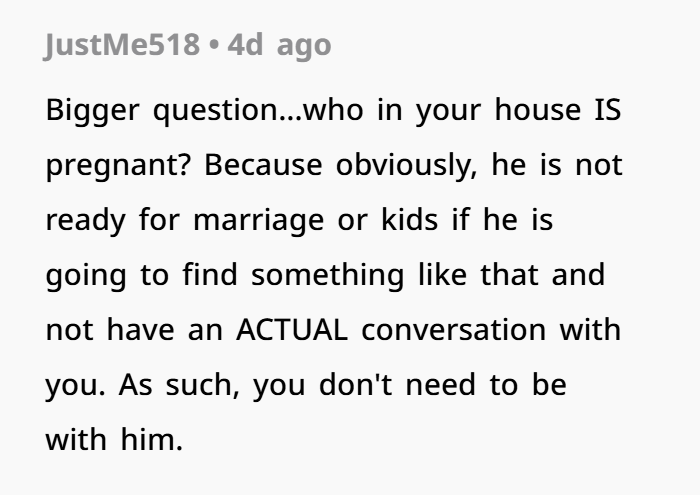

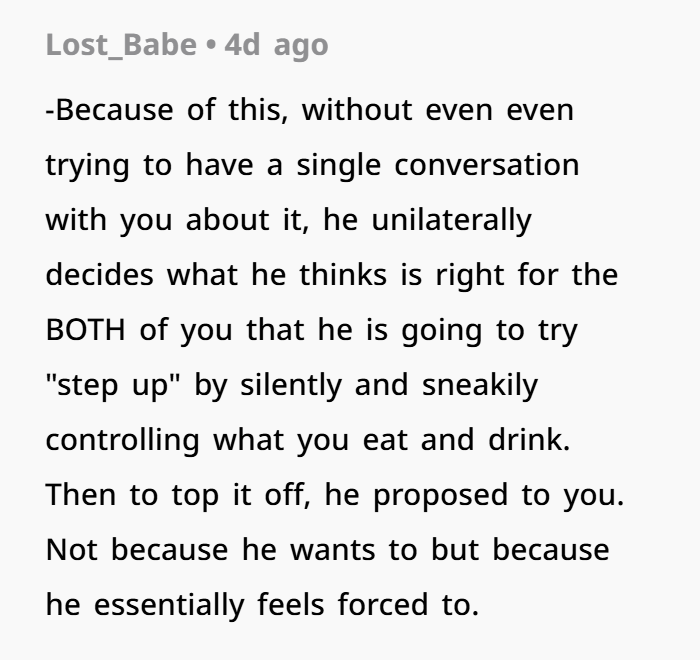
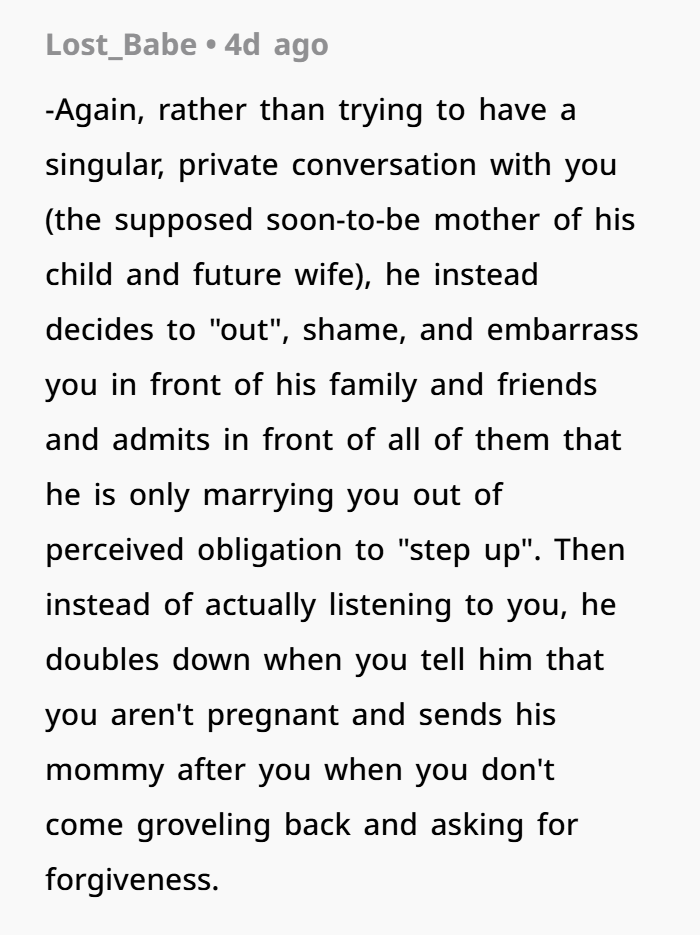
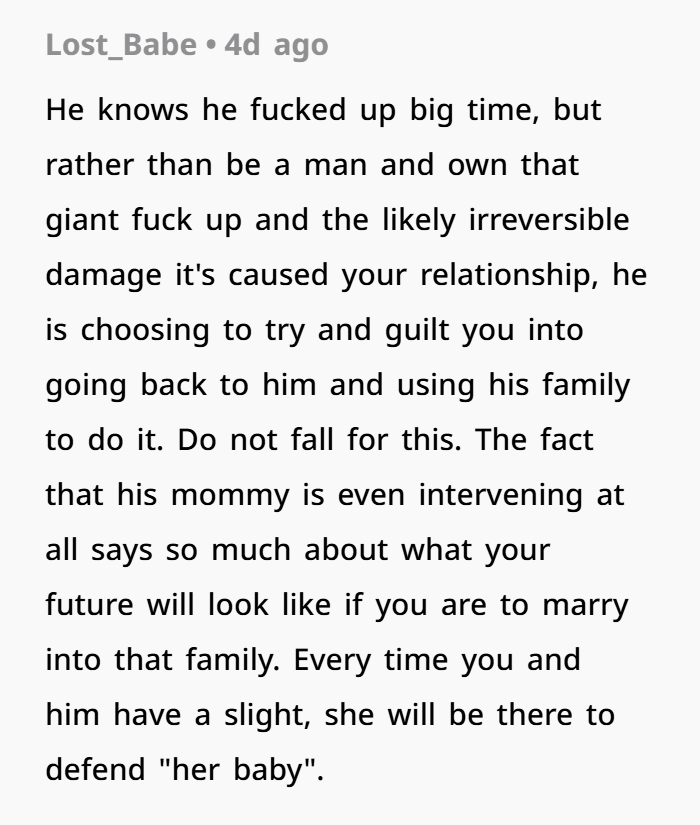
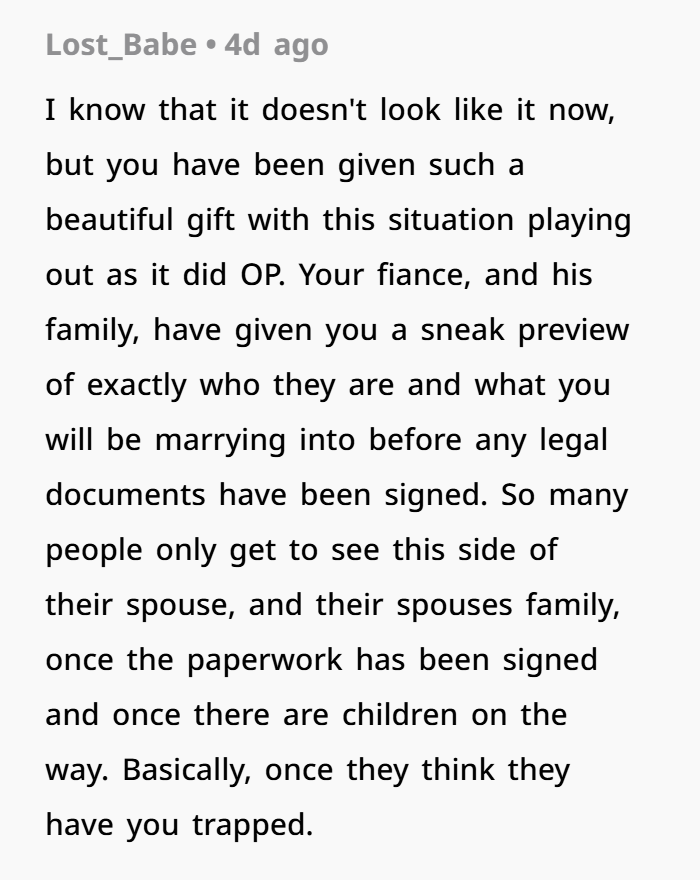
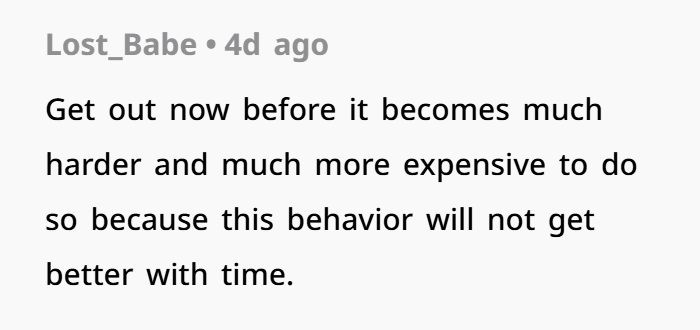
OP, you’re not being dramatic, you’re being thoughtful and proactive. Questioning an engagement that may have been based on a misunderstanding is not only reasonable, it’s essential for your well-being and the health of your relationship.
You don’t owe anyone a rushed reconciliation, especially not someone who embarrassed you publicly and made huge assumptions about your life without consulting you first. The fiancé’s actions—making assumptions about your pregnancy and proposing based on that assumption—are serious red flags. Regardless of how you feel about him, trust, honesty, and communication are just as important as love, if not more. If those things are missing, it’s difficult to build a healthy, lasting partnership.
Take your time. Reflect on the situation without the pressure of having to decide immediately. Listen if you want to hear his side, but don’t ignore the red flags that have appeared. Your feelings, your boundaries, and your emotional needs are valid—and they should be the priority as you move forward in making any decisions about your future together.
Love is important, but it doesn’t make up for miscommunication, dishonesty, or lack of respect. Take the space you need to assess whether this relationship has the foundation necessary to grow and thrive.